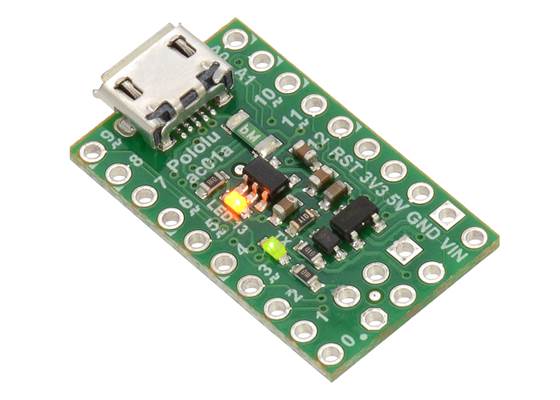
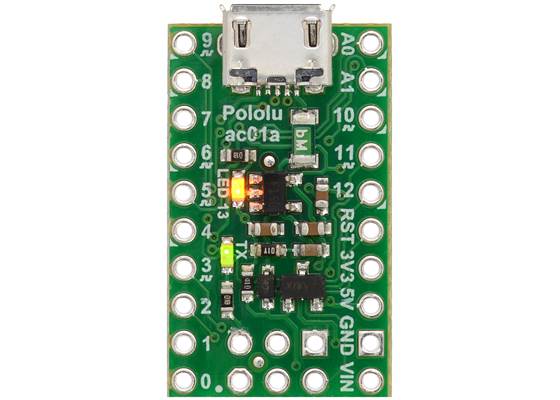
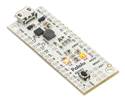
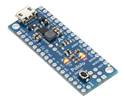
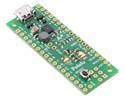
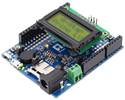
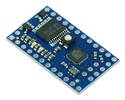
The A-Star 32U4 Micro is a tiny programmable module featuring the ATmega32U4 AVR microcontroller. It packs a Micro-USB interface and 18 digital input/output pins (of which 6 are available to be used as PWM outputs and 8 as analogue inputs) onto a board measuring only 1″ × 0.6″ and ships preloade...
In stock in Australia
Shipping from $4.90
+252 more from our supplier in 7-10 days
Our Code: MCU-60168
Supplier Link: [Pololu MPN:3101]
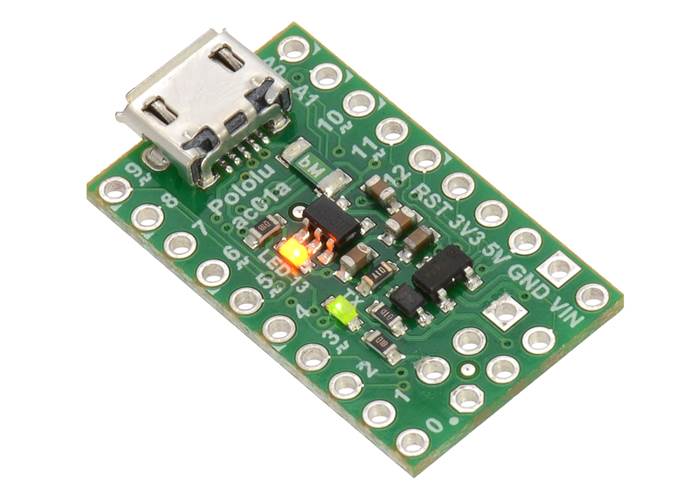
The A-Star 32U4 Micro is a tiny programmable module featuring the ATmega32U4 AVR microcontroller. It packs a Micro-USB interface and 18 digital input/output pins (of which 6 are available to be used as PWM outputs and 8 as analog inputs) onto a board measuring only 1″ × 0.6″ and ships preloaded with an Arduino-compatible bootloader.

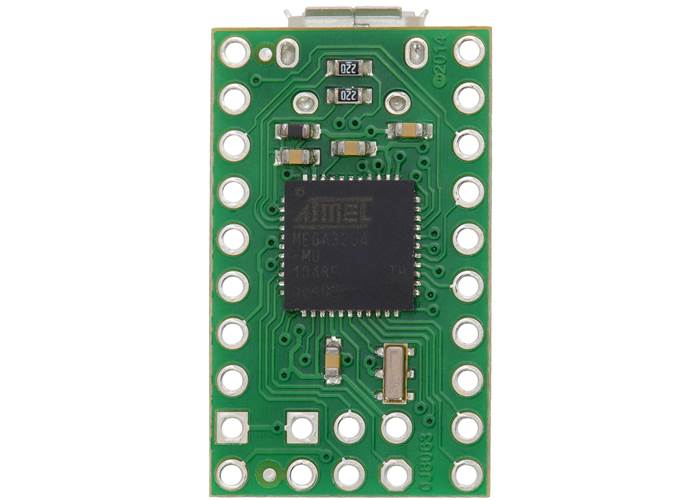
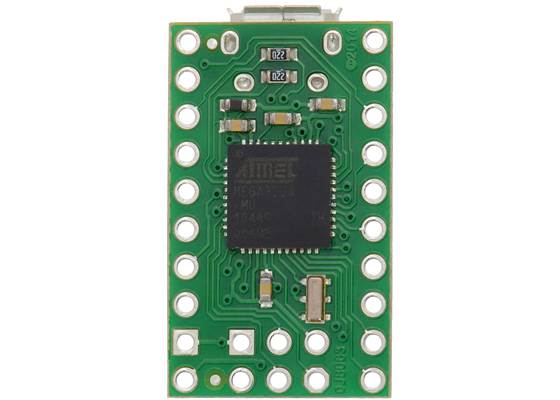
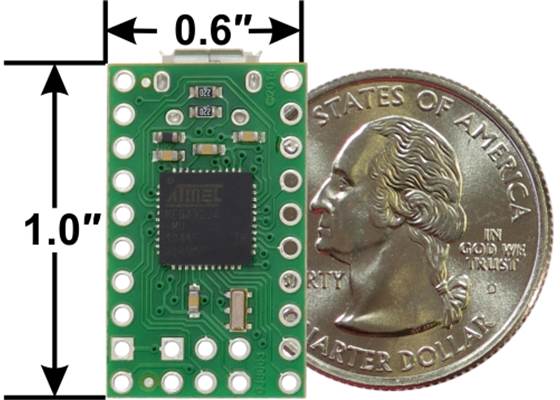
A-Star 32U4 Micro, bottom view with U.S. quarter for size reference.
The Pololu A-Star 32U4 Micro is a general-purpose programmable module based on the ATmega32U4 AVR microcontroller from Microchip (formerly Atmel), which has 32 KB of flash program memory, 2.5 KB of RAM, and built-in USB functionality. Onboard features of the A-Star (abbreviated A*) include a 16 MHz resonator, a USB Micro-B connector, an in-system programming (ISP) header, and a pair of indicator LEDs. A voltage regulator and power selection circuit allow the board to be powered from either USB or an external 5.5 V to 15 V source, while a resettable PTC fuse on the USB VBUS supply and reverse protection on VIN help protect it from accidental damage.
The A-Star 32U4 Micro breaks out 15 general-purpose I/O lines along two rows of pins, including 6 usable as PWM outputs and 8 usable as analogue inputs; another three GPIO pins can be accessed through the 6-pin ISP header. It fits all this into a 20-pin dual in-line package (DIP) measuring only 1″ × 0.6″ (even smaller than competing ATmega32U4 boards like the Teensy 2.0 and Pro Micro), and its 0.1″ pin spacing makes the A* easy to use with solderless breadboards, perfboards, and 0.1″-pitch connectors.
Our comprehensive user’s guide provides the basics you need to get started with the A-Star as well as detailed technical information for advanced users.
This product requires a USB A to Micro-B cable (not included) to connect to a computer.
The A-Star 32U4 ships with a preloaded Arduino-compatible bootloader (which uses 4 KB of flash memory, leaving 28 KB available for the user program). We provide a software add-on that enables the board to be easily programmed from the Arduino environment.
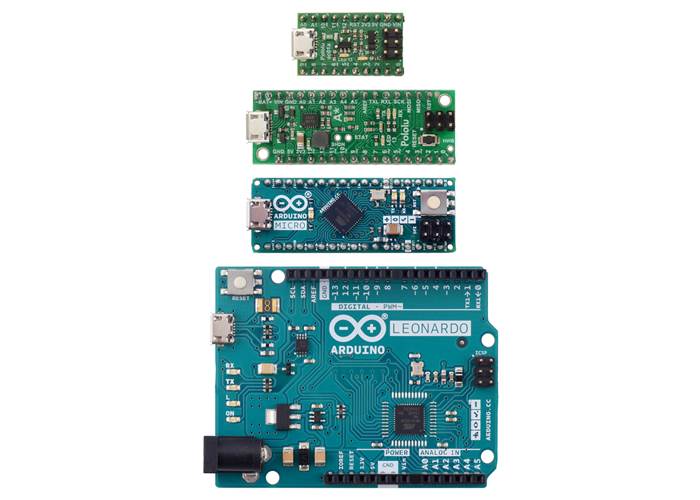
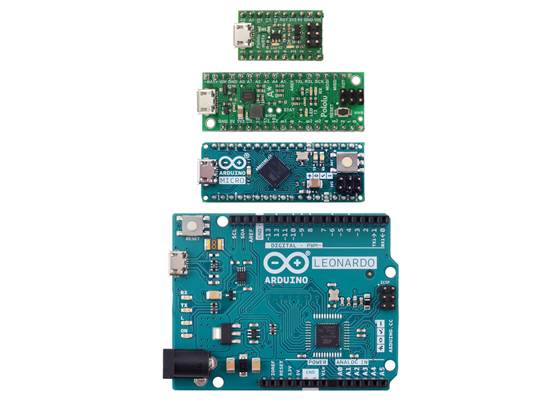
The A-Star 32U4 uses the same microcontroller as the Arduino Leonardo and Arduino Micro and runs at the same frequency, making it just as powerful. Although the larger boards offer a few more I/O pins, the A-Star 32U4 Micro fits in an area half that of the Arduino Micro, and it takes up only 11% as much area as a standard full-size Arduino!
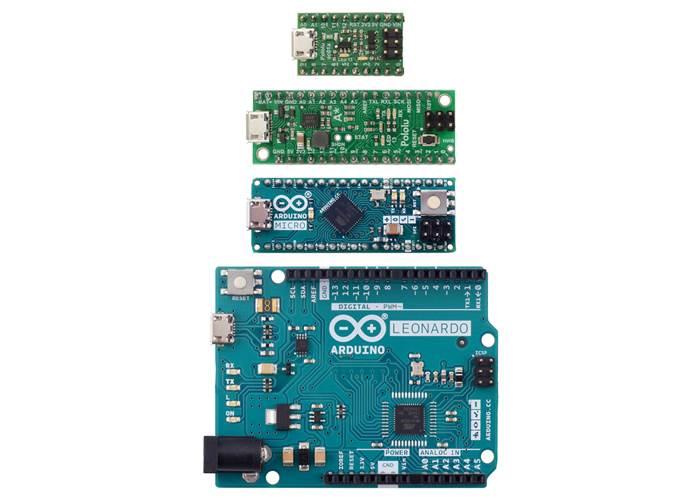
Pololu A-Star 32U4 Micro, Pololu A-Star 32U4 Mini SV, Arduino Micro, and Arduino Leonardo.
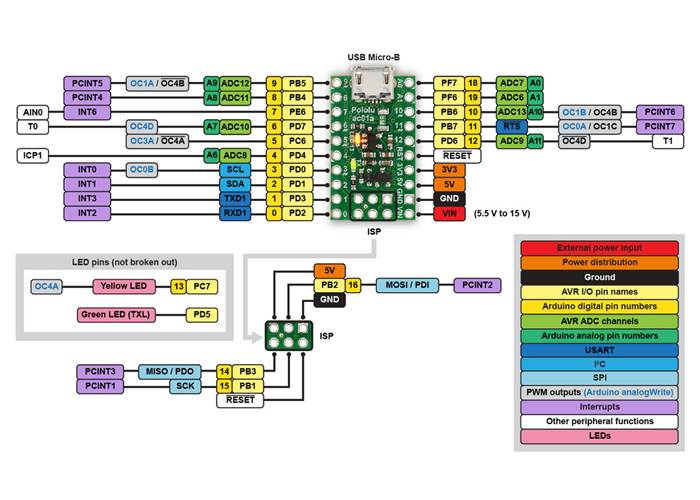
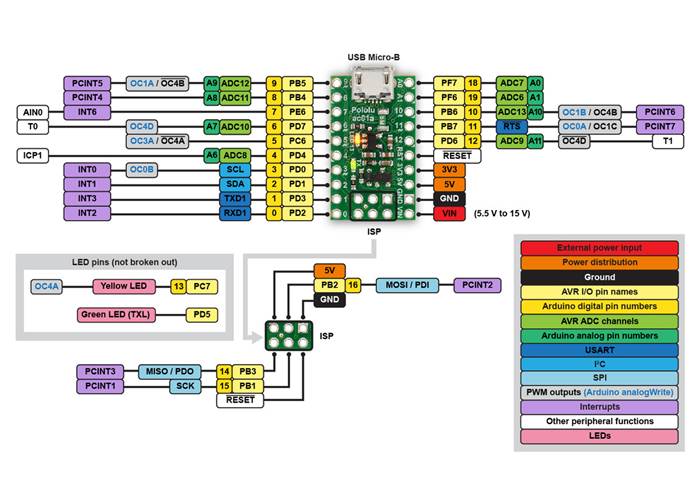
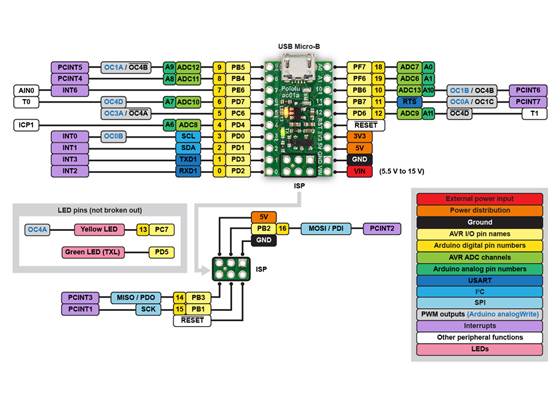
A-Star 32U4 Micro pinout diagram.
This diagram identifies the I/O and power pins on the A-Star 32U4 Micro; it is also available as a printable PDF (409k pdf). For more information about the ATmega32U4 microcontroller on this board, see Microchip’s ATmega32U4 documentation.
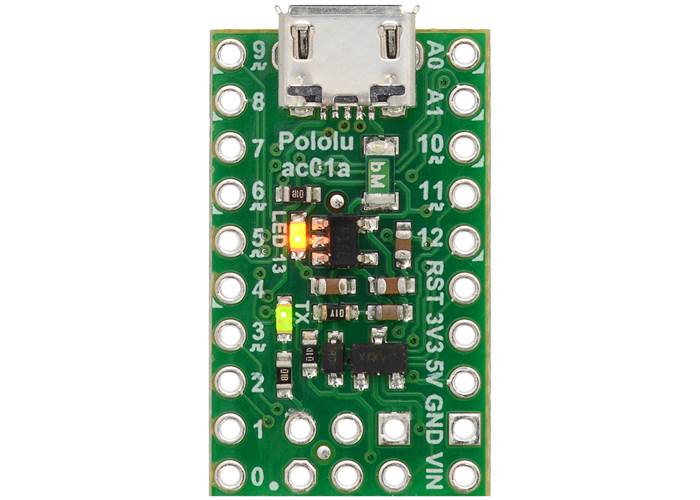
Printed on the A* circuit board are indicators that you can use to quickly identify each pin’s capabilities: a triangle next to the pin means it can be used as an analogue input, and a square wave symbol under the pin number means it can be used as a PWM output.
The board can either be powered directly from the USB 5 V supply or from a separate 5.5 V to 15 V source on the VIN pin, which is reduced to 5 V by a 100 mA low-dropout (LDO) regulator; you can access this 5 V supply through the 5V power output pin. Additionally, the ATmega32U4 contains an internal 3.3 V regulator whose output is available on the 3V3 pin. Current drawn from the 3V3 output should not exceed about 50 mA, and when the board is being powered through VIN, the sum of the 5V output current, 3V3 output current, GPIO output current, and current used by the board itself (typically about 25 mA) should not exceed 100 mA.
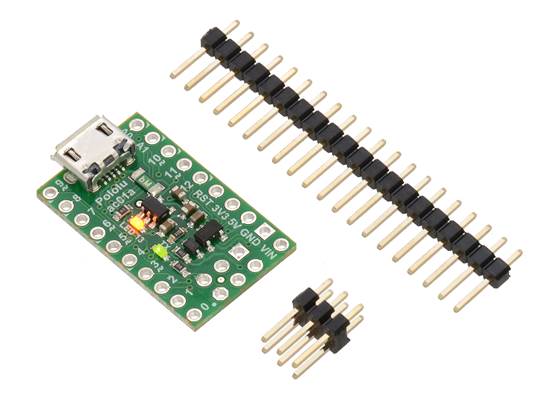
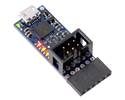
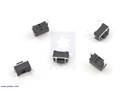
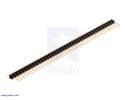
A 1×20-pin breakaway 0.1″ male header is included with the A-Star 32U4 Micro, which can be soldered in to use the board with perfboards, breadboards, or 0.1″ female connectors. (The headers might ship already separated into two 1×10 pieces.) Also included is a 2×3 header that can be installed to allow external programming of the microcontroller through the AVR ISP interface, such as with our USB AVR programmer.
A-Star 32U4 Micro with included optional headers. |
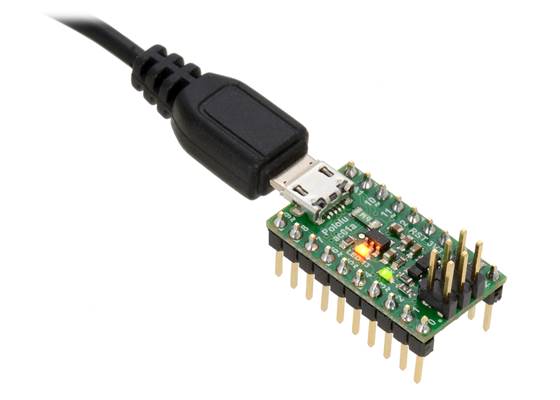
A-Star 32U4 Micro with soldered headers and connected USB cable. |
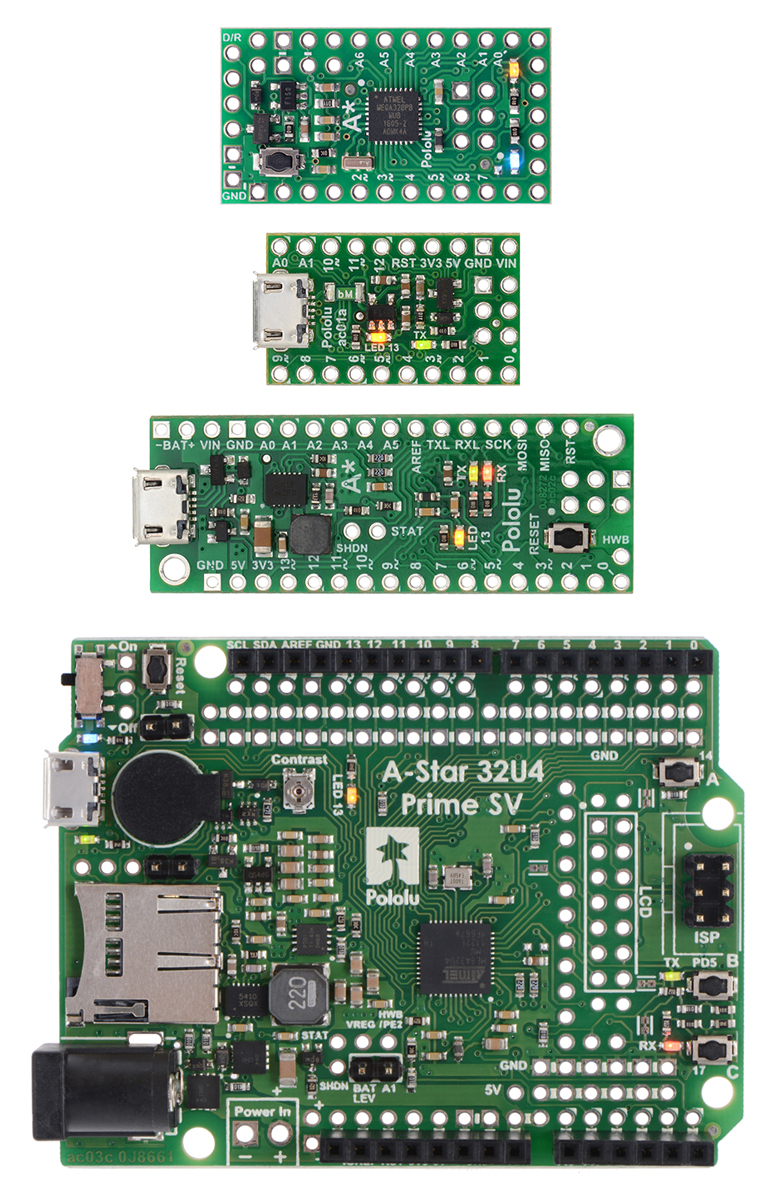 |
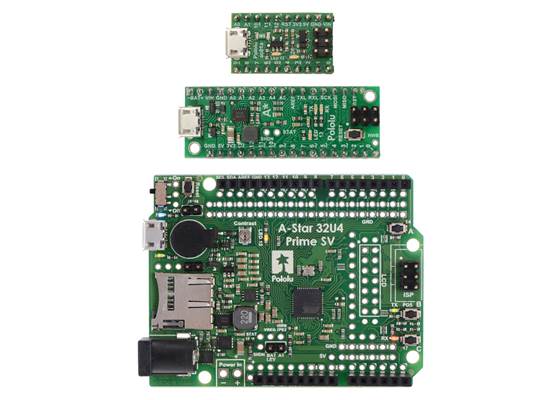
From top to bottom: A-Star 328PB Micro, 32U4 Micro, 32U4 Mini SV, and 32U4 Prime SV. |
|---|
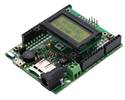
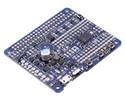
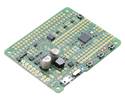
The A-Star 32U4 Micro is a part of our larger A-Star family, all of whose members are based on AVR microcontrollers and are preloaded with Arduino-compatible bootloaders. The table below shows some key features and specifications of our A-Star microcontroller boards to help you choose the right one for your application.
 |
   |
  |
  | ||
|---|---|---|---|---|---|
| A-Star 328PB Micro | A-Star 32U4 Micro | A-Star 32U4 Mini ULV A-Star 32U4 Mini LV A-Star 32U4 Mini SV |
A-Star 32U4 Prime LV A-Star 32U4 Prime SV |
A-Star 32U4 Robot Controller LV A-Star 32U4 Robot Controller SV |
|
| Microcontroller: | ATmega328PB | ATmega32U4 | |||
| User I/O lines: | 24 | 18 | 26 | 26(1) | 26(1) |
| Available PWM outputs: | 9 | 6 | 7 | 7 | 7(1) |
| Analogue inputs: | 8 | 8 | 12 | 12 | 12(1) |
| Ground access points: | 6 | 2 | 4 | 43 | 44 |
| User LEDs: | 1 | 2 | 3 | 3 | 3 |
| User pushbuttons: | — | — | — | 3 | 3 |
| USB interface: |  |
|
|
|
|
| Reset button: | |
|
|
|
|
| Power switch: | |
|
|||
| Buzzer option: | |
|
|||
| microSD option: | |
||||
| LCD option: | |
||||
| Motor drivers: | |
||||
| Operating voltage: | 3.3V VCC: 3.8 V to 15 V 5V VCC: 5.5 V to 15 V |
5.5 V to 15 V | ULV: 0.5 V to 5.5 V LV: 2.7 V to 11.8 V SV: 5 V to 40 V |
LV: 2 V to 16 V SV: 5 V to 36 V |
LV: 2.7 V to 11 V SV: 5.5 V to 36 V |
| Regulator type: | 3.3 V or 5 V linear | 5 V linear | 5 V switching ULV: step-up LV: step-up/step-down SV: step-down |
5 V switching LV: step-up/step-down SV: step-down |
5 V switching LV: step-up/step-down SV: step-down |
| Regulated current:(2) | 100 mA | 100 mA | ULV: 500 mA LV: 1 A SV: 800 mA |
LV: 1.8 A SV: 1 A |
LV: 1 A SV: 1.5 A |
| Dimensions: | 1.3″ × 0.7″ | 1″ × 0.6″ | 1.9″ × 0.7″ | 2.8″ × 2.1″ | 2.6″ × 2.2″ |
| Weight: | 1.5 g(3) | 1.3 g(3) | 3.4 g(3) | 13 g to 33 g | 14 g to 23 g |
| Price: | $11.72 | $19.95 | $29.95 to $29.95 | $33.40 to $53.00 | $39.05 to $54.84 |
| 1 Some microcontroller resources are used by on-board hardware. | |||||
| 2 These values are rough approximations for comparison purposes. Available current depends on input voltage, current consumed by the board, ambient conditions, and regulator topology. See product documentation and performance graphs for details. | |||||
| 3 Without included optional headers. | |||||
| Size: | 0.6″ × 1.05″ × 0.18″1 |
|---|---|
| Weight: | 1.3 g2 |
| Processor: | ATmega32U4 @ 16 MHz |
|---|---|
| RAM size: | 2560 bytes |
| Program memory size: | 32 Kbytes3 |
| Motor channels: | 0 |
| User I/O lines: | 184 |
| Minimum operating voltage: | 5.5 V |
| Maximum operating voltage: | 15 V |
| Logic voltage: | 5 V |
| Reverse voltage protection?: | Y5 |
| External programmer required?: | N |
| PCB dev codes: | ac01a |
|---|---|
| Other PCB markings: | 0J8063 |
User’s manual for the Pololu A-Star 32U4 family of user-programmable boards.
Printable schematic diagram of the A-Star 32U4 Micro.
This download contains the Windows drivers for the A-Star 32U4 and the rest of our 32U4 family of boards.
Printable pinout diagram of the A-Star 32U4 Micro.
Detailed dimension diagram of the A-Star 32U4 Micro.
This DXF drawing shows the locations of all of the board’s holes.
The AStar32U4 library for the Arduino IDE helps interface with the on-board hardware on the A-Star 32U4 controllers.
This repository contains Arduino add-on files, Windows drivers, and bootloaders for the A-Star 328PB, A-Star 32U4, and the rest of our 32U4 family of boards.
Arduino integrated development environment (IDE) software
Microchip’s product page for the ATmega32U4 AVR microcontroller, with links to its datasheet, application notes, and other resources.
The web site for AVR Libc, which is the standard library of functions that you can use with C and C++ on the AVR.
The A-Star and Orangutan discussion section of the Pololu Robotics Forum.
AVRDUDE is a cross-platform command-line utility for programming the flash memory on AVR microcontrollers.
AVR community with forums, projects, and AVR news.
LUFA is an embedded software library written in C that can be used to create USB applications on USB-capable AVRs. It comes with a large library of example USB applications and bootloaders.
A free integrated development environment (IDE) for AVRs. Formerly known as Atmel Studio.
A free, open-source suite of development tools for the AVR family of microcontrollers, including the GNU GCC compiler for C/C++.
This is a library for the Arduino that interfaces with our LPS22DF, LPS25HB, LPS25H, and LPS331AP pressure/altitude sensor carriers as well as the pressure sensors on the various AltIMU-10 modules, which can be found here. It makes it simple to read the raw pressure data from the sensor, and it provides functions to help calculate altitude based on the measured pressure.
This library allows you to control an arbitrary number of SK6812/WS281x-Based Addressable RGB LEDs from an Arduino.
This is a library for the Arduino that interfaces with our LSM303D, LSM303DLHC, and LSM303DLM 3D compass and accelerometer carriers as well as the compass and accelerometer ICs on the MinIMU-9 v3 and AltIMU-10 v4 (it also works with older versions of those boards, some of which used the LSM303DLH and LSM303DLHC). It makes it simple to configure the device and read the raw accelerometer and magnetometer data, and it has a function for computing the tilt-compensated heading for those looking to use the LSM303 as a tilt-compensated compass.
This is a library for the Arduino that interfaces with our L3GD20H and L3GD20 3-axis gyro carriers as well as the gyros on the MinIMU-9 v3 and AltIMU-10 v3 (it also works with older versions of those boards, some of which used the L3G4200D and the L3GD20). It makes it simple to configure the device and read the raw gyro data.
This guide explains how to use the QTRSensors library to read Pololu QTR reflectance sensors and QTR sensor arrays with Arduinos and Arduino-compatible devices like the Pololu Orangutan robot controllers.

 Brands