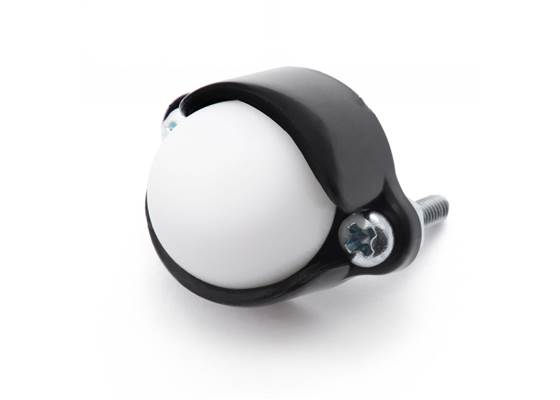
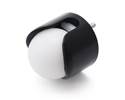
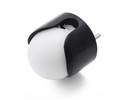
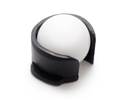
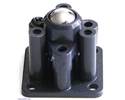
This light ball castor uses a 1/2″ diameter plastic ball. The height of the assembled kit ranges from 0.5″ to 0.8″, depending on the combination of included spacers used.
In stock in Australia
Shipping from $9.90
+371 more from our supplier in 7-10 days
Our Code: SKU-002439
Supplier Link: [Pololu MPN:952]
This light ball caster uses a 1/2″ diameter plastic ball. The height of the assembled kit ranges from 0.5″ to 0.8″, depending on the combination of included spacers used.

Pololu ball caster with 1/2" plastic ball with included hardware.
This ball castor kit includes a black ABS housing, a 1/2″ diameter plastic ball, two spacers (1/16″ and 1/8″ thick), and two 7/16″ #2 screws and nuts. The total height of the ball castor, 0.53″, can be increased to about 0.7″ using the included spacers. The two included #2 screws can be used to mount the ball castor to your chassis, or you can use your own #2 or M2 screws if your application requires a different length.
Note that our ball casters are designed for small robots; they are not intended to bear more than a few pounds. With more weight than this, friction between the ball and the housing will generally keep it from rolling well.
For detailed dimensions, see the dimension diagram (162k pdf).
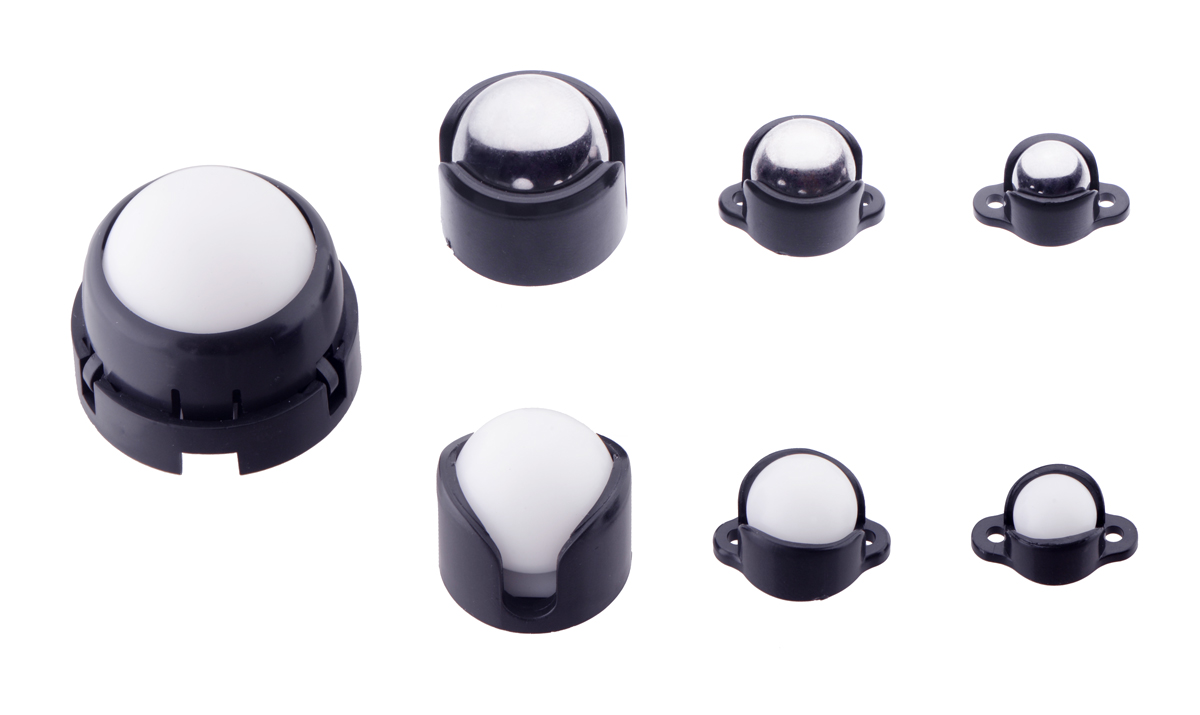 |
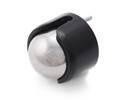
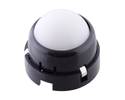
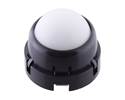
Pololu ball casters with plastic and metal balls. Ball diameter from left to right: 1″, 3/4″, 1/2″, and 3/8″. |
|---|
Pololu ball castor ball diameter |
height with no spacers |
distance between screw holes |
weight with no spacers or screws |
| 0.40″ | 0.53″ | 0.03 oz | |
| 0.40″ | 0.53″ | 0.14 oz | |
| 0.53″ | 0.58″ | 0.07 oz | |
| 0.53″ | 0.58″ | 0.32 oz | |
| 0.88″ | 0.24″ | 0.25 oz | |
| 0.82″ | 0.61″ | 1.05 oz | |
| 1.10″ | 0.48″ | 0.65 oz | |
| 1.10″ | 0.48″ | 0.58 oz | |
| 1.10″ | 0.70″ | 0.36 oz |

 Brands