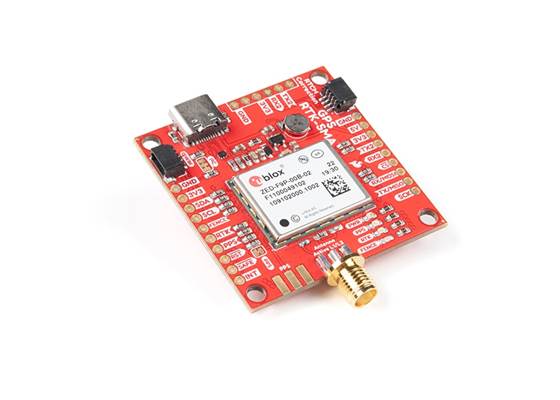
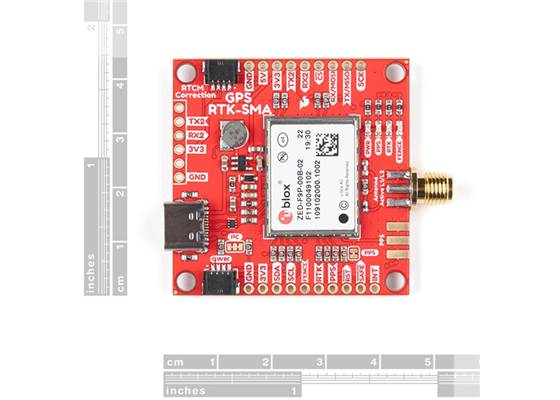
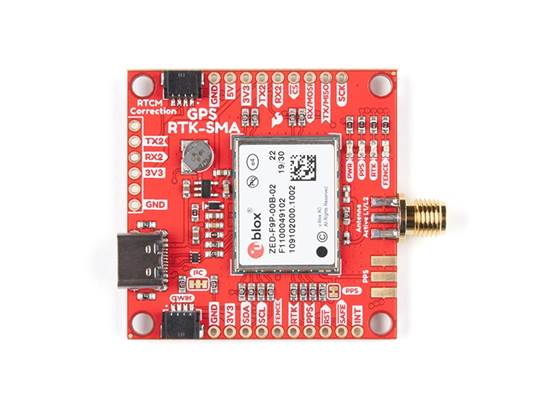
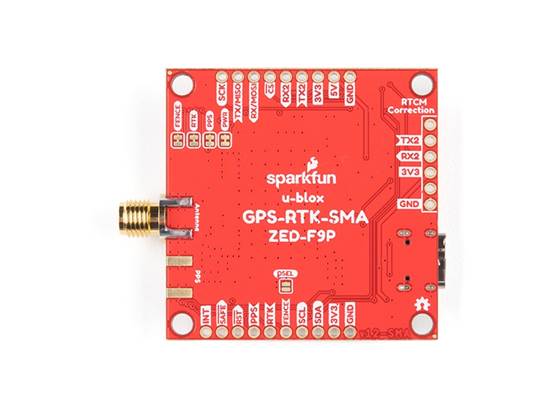
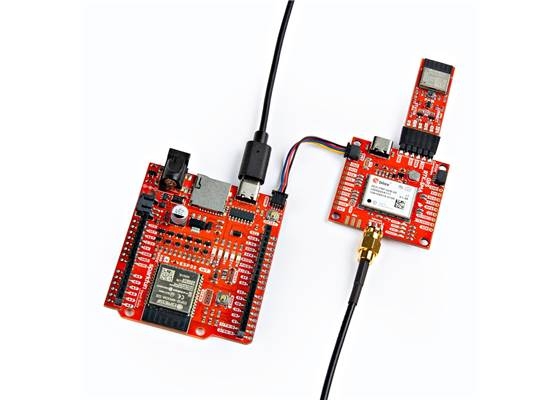
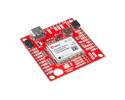
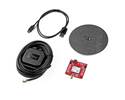
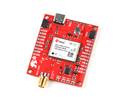
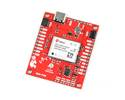
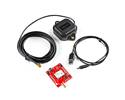
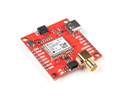
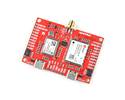
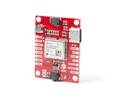
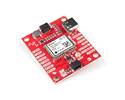
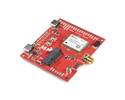
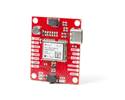
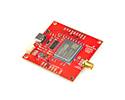
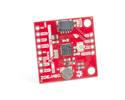
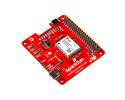
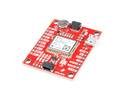
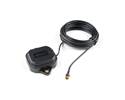
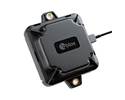
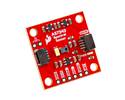
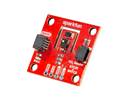
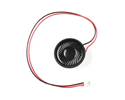
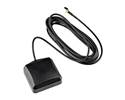
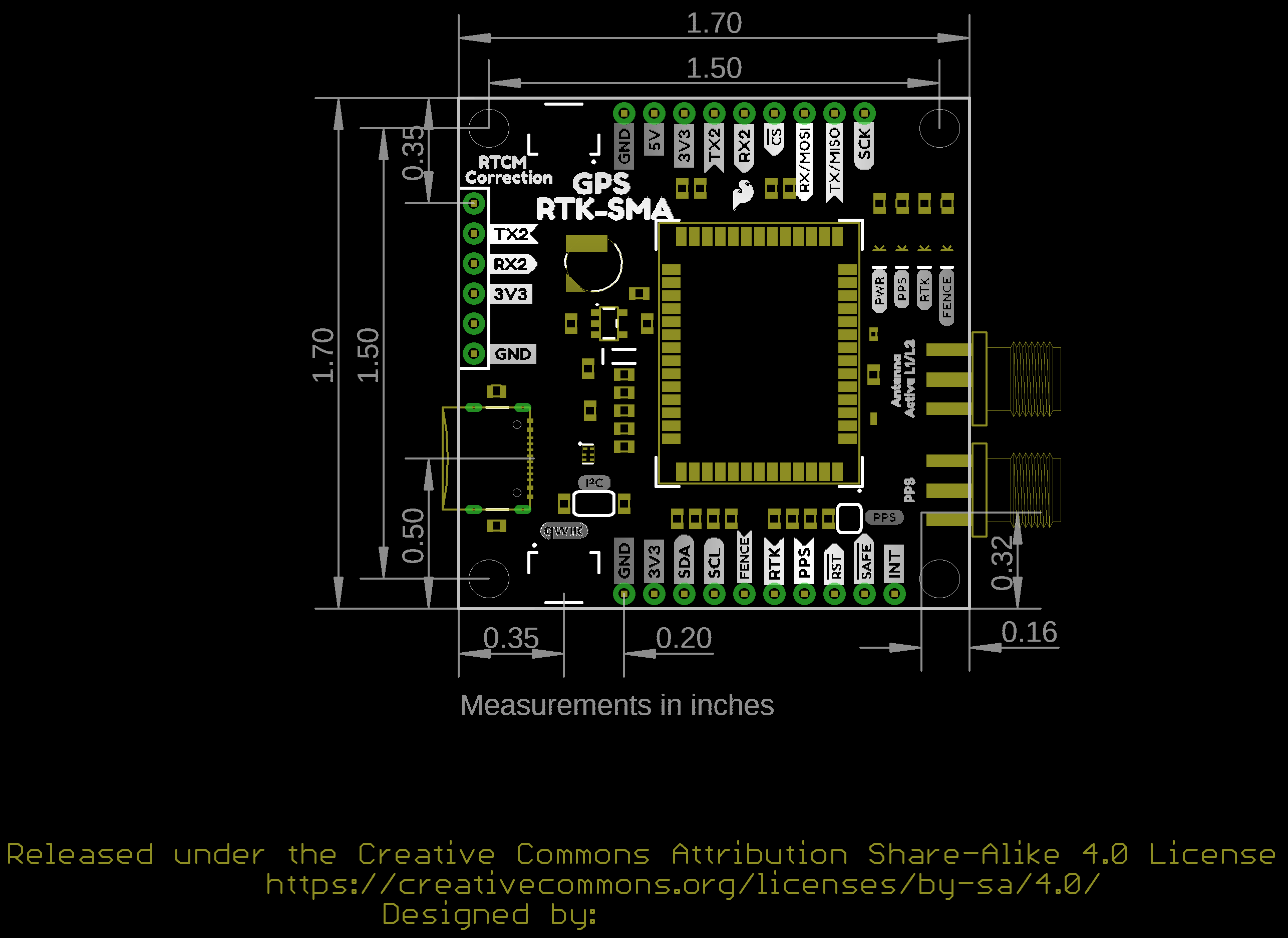
Achieve millimetre-level, three-dimensional RTK accuracy with the SparkFun GPS-RTK-SMA Breakout, which features the u-blox ZED-F9P module for both rover and base station operations and includes Qwiic and SMA connectors.
Special Order
Shipping from $15.20
+152 more from our supplier in 7-10 days
Our Code: SKU-006371
Supplier Link: [SparkFun MPN:16481]
Standard GPS gets you within a few meters, but when you need to know exactly where you are, you need RTK. Real-Time Kinematics (RTK) technology has mastered high-precision GPS, dialling in accuracy down to the millimetre.
The SparkFun GPS-RTK-SMA raises the bar for high-precision GNSS. It is built around the ZED-F9P module from u-blox, a top-of-the-line solution for high-accuracy GNSS and GPS location. This module is capable of an incredible 10mm three-dimensional accuracy, allowing you to pinpoint your (or any object's) X, Y, and Z location to within roughly the width of your fingernail.
What truly sets the ZED-F9P apart is its ability to operate as both a rover (receiving correction data) and a base station (broadcasting correction data). The module features a "survey-in" mode, allowing it to easily become a base station and produce RTCM 3.x correction data, providing a complete, professional-grade RTK solution.
Based on your feedback, this version of our RTK board features a robust, panel-mountable SMA connector, ensuring a secure and durable connection to your antenna.
We've designed this board for maximum flexibility, no matter your setup:
An onboard rechargeable backup battery keeps the latest module configuration and satellite data available for up to two weeks. This enables a "warm-start," which dramatically decreases the time-to-first-fix (TTFF).
The configuration options are incredible. You can set a variable I2C address, implement geofencing, and even increase the high-precision RTK navigation update rate to 20 Hz.
We've written an extensive SparkFun Arduino library for u-blox modules to make reading and controlling the GPS-RTK-SMA over I2C incredibly easy. We highly recommend leaving processor-intensive NMEA parsing behind! Our library focuses on the much lighter-weight binary interface, allowing you to read latitude, longitude, heading, and speed—all over I2C. This frees up your microcontroller's valuable serial port for other tasks, like logging data or communicating with a radio.
Max Navigation Rate:
Horizontal Position Accuracy:
Limitations:
Dimensions:

 Brands