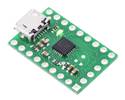
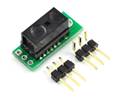
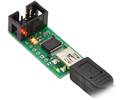
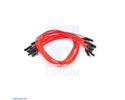
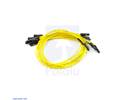
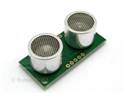
The Pololu USB-to-serial adaptor is a tiny unit that makes it easy to connect a microcontroller project to a PC. You can connect the adaptor directly to a microcontroller without an RS-232-to-TTL level converter.
Special Order
Shipping from $9.90
+32 more from our supplier in 7-10 days
Our Code: COM-40021
Supplier Link: [Pololu MPN:391]
The Pololu USB-to-serial adapter is a tiny unit that makes it easy to connect a microcontroller project to a PC. You can connect the adapter directly to a microcontroller without an RS-232-to-TTL level converter. It is USB 2.0-compatible and will work with your existing programs that interface with a serial port.
Note: This product is not recommended for new designs (NRND) based on Silicon Labs designating the CP2102 as NRND. Please see the CP2102N USB-to-Serial Adaptor Carrier for a similar, newer adaptor with a USB Micro-B connector.
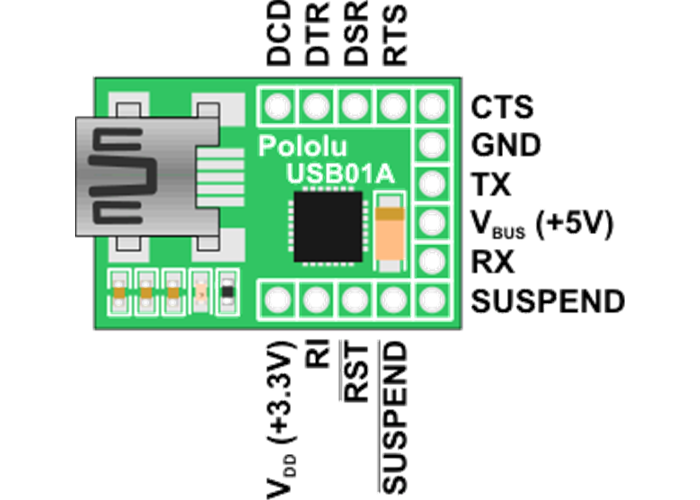
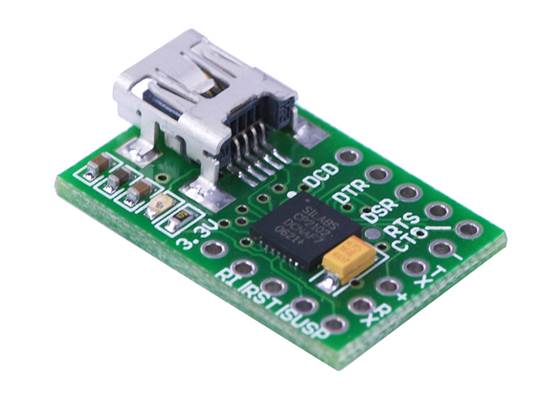
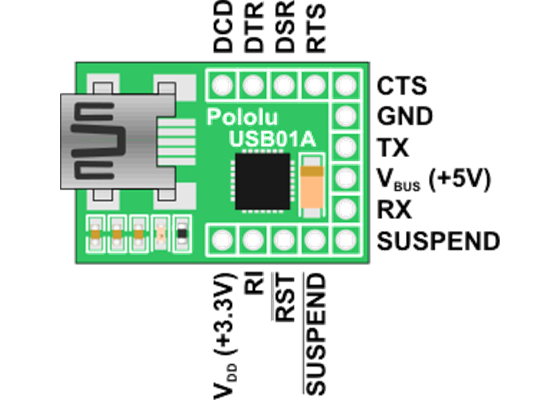
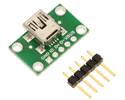
The Pololu USB-to-serial adaptor is great for connecting microcontroller projects to a personal computer. The adaptor uses 3.3 V signal levels so you can connect it directly to any microcontroller running at up to 5 V without the hassle of an RS-232-to-TTL level converter. The tiny unit is only 1.0" x 0.65" including its mini-B connector, and the simple layout of the ground, transmit, and receive lines allows for easy mounting that takes up as little as four breadboard rows.
The USB adaptor’s drivers make it look like a standard serial port to the operating system, allowing you to connect to all of your existing software, such as servo controller interface programs, through a USB port. The adaptor is compatible with USB 2.0 standards and allows baud rates of up to 921.6 kbps. Drivers are available for Windows XP, Windows Vista, Windows 7, Windows 8, Windows 10, Linux, and Mac OS X.
With the trend towards removing serial ports from new computers, the Pololu USB-to-serial adaptor provides one of the most economical, small, and simple solutions to the common problem of interfacing small projects to PCs.
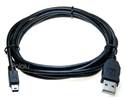
Note: This product does not include printed documentation or software discs. The Pololu USB-to-serial adaptor requires software drivers to operate; please see the resources tab for more information. This product requires a USB A to mini-B cable (not included) to connect to a computer.
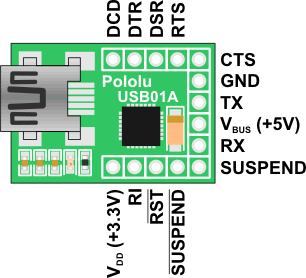 |
| Pin | Type | Function |
|---|---|---|
| DCD | In | "Data carrier detect" control input (active low) |
| DTR | Out | "Data terminal ready" control output (active low) (often used with DSR) |
| DSR | In | "Data set ready" control input (active low) (often used with DTR) |
| RTS | Out | "Ready to send" control output (often used with CTS) |
| CTS | In | "Clear to send" control input (often used with RTS) |
| GND | Power | Ground |
| TX | Out | Asynchronous serial data transmit (idle high) |
| VBUS | Power | USB bus voltage (+5V) |
| RX | In | Asynchronous serial data receive |
| SUSPEND | Out | Driven high when in USB suspend state |
| SUSPEND | Out | Driven low when in USB suspend state |
| RST | In | Device reset |
| RI | In | "Ring indicator" control input (active low) |
| VDD | Power | 3.3 V voltage regulator output |
To connect a serial device to your computer’s USB port, you will most likely only need to use the GND, TX, and RX lines. The TX and RX lines use 3.3-volt levels, but the USB adaptor input lines will tolerate up to 5.5 volts. Therefore, a direct connection to a microcontroller’s I/O lines is usually possible.
For some programs, it will be necessary to connect the handshaking lines (RTS, CTS, etc.) if the software does not establish a connection without those lines. In general, the handshaking lines can be left disconnected, used for their intended purpose, or used as additional I/O lines to the computer.
CP2102 Drivers and installation instructions for Windows, Mac, and Linux. The CP2102 is used on the Pololu USB-to-Serial Adaptor, the Orangutan USB Programmer, the USB 16-Servo Controller, and the Orangutan X2.

 Brands