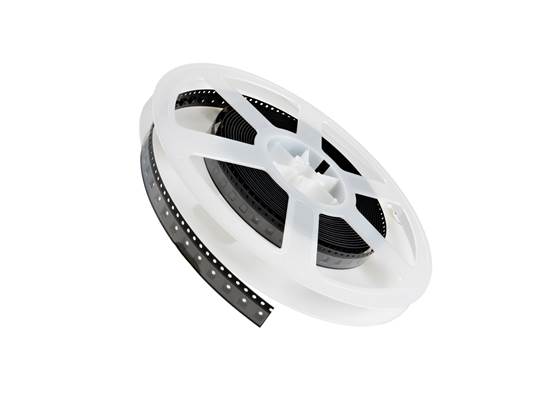
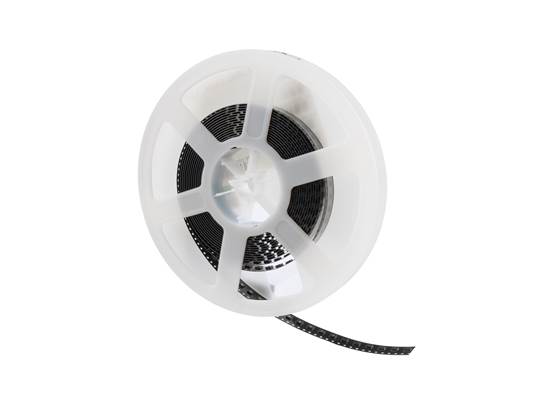
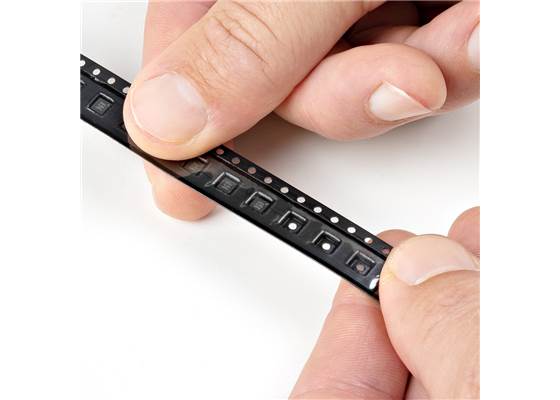
Plan large-scale production runs for custom Teensy 4.0 or Teensy 4.1 PCBs with this reel of 500 pre-programmed bootloader chips, featuring version 1.09 firmware and lockable code security.
Special Order
Shipping from $68.70
+3 more from our supplier in 7-10 days
Our Code: SKU-011503
Supplier Link: [SparkFun MPN:32461]
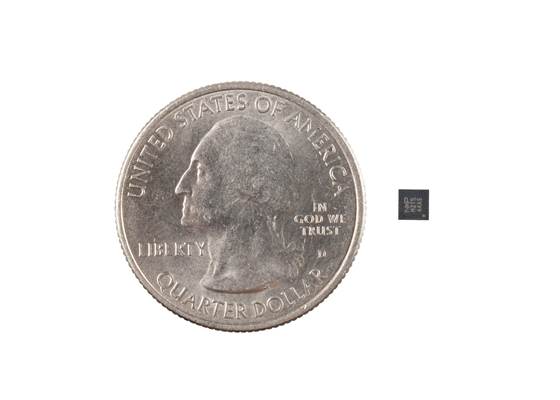
The Teensy T4 Bootloader Chip is the essential component for creating a custom PCB that is 100% compatible with the Teensy 4.0 or Teensy 4.1. Rather than embedding a full development board into your final project or production run, you can pair this pre-programmed QFN16 IC with a blank NXP i.MX RT1062 microcontroller and an external flash memory chip on your own circuit board. This chip comes flashed with version 1.09 of the PJRC bootloader that handles everything from initial fuse configuration and power sequencing to secure firmware updates via the Teensy Loader application.
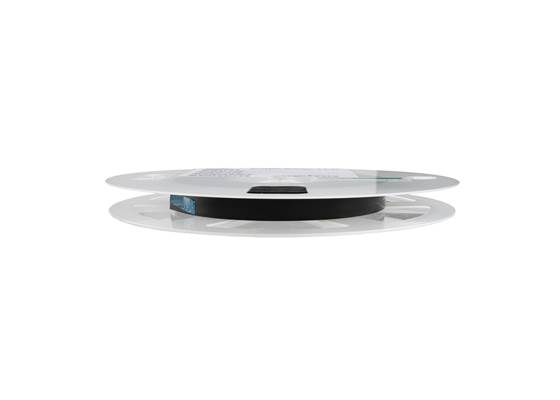
These ICs are shipped as uncut reels containing 500 Teensy T4 Bootloader Chips. This bulk packaging is the most economical solution for large-scale production runs, manufacturing custom Teensy-powered boards, and contract manufacturing supply. If you're looking for quantities in the 1-499 range, consider picking up chips in cut tape instead.
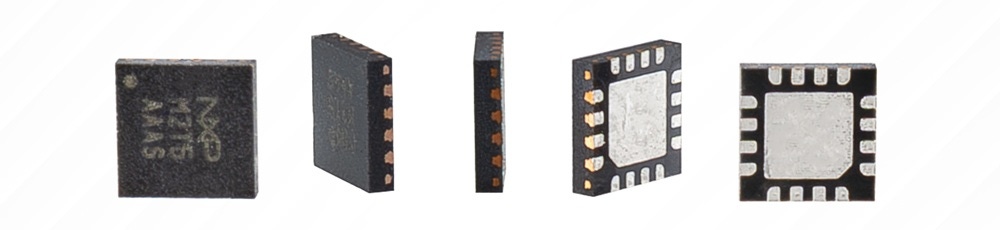
Because the Teensy T4 Bootloader Chip acts as the bridge between the Teensy software environment and blank off-the-shelf silicon, your custom board design will need to pair it with specific external hardware to form a working system:
Supported Microcontrollers: An IMXRT microcontroller (specifically NXP's MIMXRT1062DVJ6B or MIMXRT1062DVL6A processors), along with a 24MHz crystal oscillator and an optional 32.768kHz RTC crystal, must be paired with this Teensy T4 Bootloader Chip to form a working system. No programming or other setup is needed on these other chips.
Automatic Model Detection: Bootloader version 1.09 automatically configures your board's identity based on the attached flash memory chip's capacity. Use a 16Mbit (2MB) chip to emulate a Teensy 4.0, a 64Mbit (8MB) chip for a Teensy 4.1, or a 128Mbit (16MB) chip for a Teensy MicroMod.
Flash Compatibility: Supports a wide range of QSPI flash memory ICs across Winbond (both -M and -Q variants), GigaDevice, ISSI, Microchip, and BYT Semi. A full list of supported flash chips is listed in the Features section below.
Power-Up Sequencing: Actively manages the strict startup timing of the i.MX RT1062 by monitoring the 3.3V rail and driving the DCDC_PSWITCH pin from low to high once main power is stable, activating the MCU's internal 1.15V buck converter.
One-Time Hardware Initialisation: The first time the MKL02 and a blank i.MX RT1062 power up together, the bootloader permanently configures the MCU's internal fuses for flash booting and JTAG communication, burns a unique 48-bit MAC address, and writes the factory 15-second restore blink program into the top 4KB of flash memory.
The T4 Bootloader Chip also supports full Teensy 4 code security that makes it ideal when used in commercial products and proprietary designs. Using the Teensyduino IDE, you can generate and write a permanent encryption key into the processor's fuse memory and lock the board into secure mode. Once the chip has been locked, all program code stored on the external flash chip is encrypted, JTAG access is permanently disabled, and only firmware encrypted with your specific key can execute. This allows you to distribute encrypted .ehex firmware updates to end users without exposing your source code.
Teensy T4 Bootloader Chip:
.ehex updates)DCDC_PSWITCH sequencing, initial fuse setup, MAC address assignment, diagnostic blink codesAdditional Required Parts:
BGA Pinout Diagram
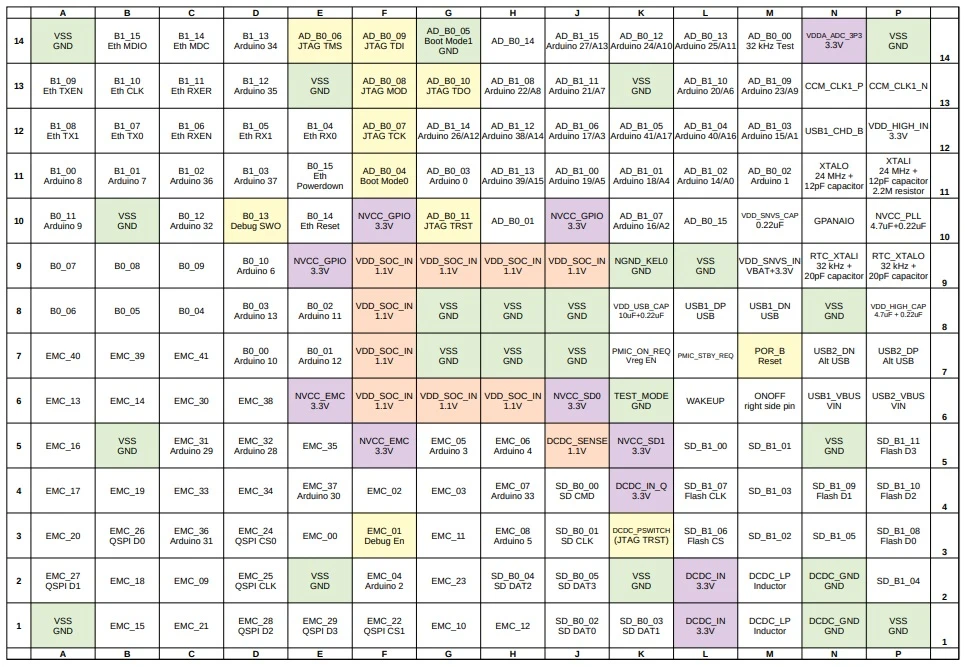
If you route I/O pins not normally used on any Teensy model, you will need to edit the Teensy core library to add support for those pins. You will also need to edit the Wire library if you use the 4th I2C port.
Avoid using SD_B1_05 (BGA pin N3) for I/O. Normally, this pin should be left unconnected. The flash memory controller uses this pin to compensate for signal speed. Also avoid using EMC_23 (BGA pin G2) if you connect a PSRAM chip to EMC_24-EMC_29.

 Brands