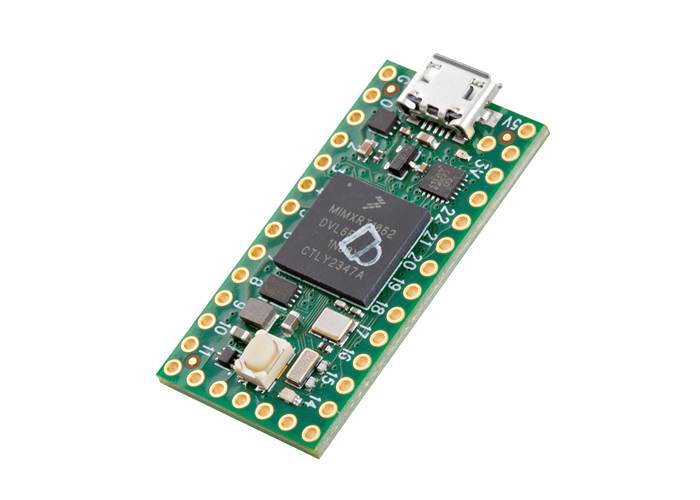
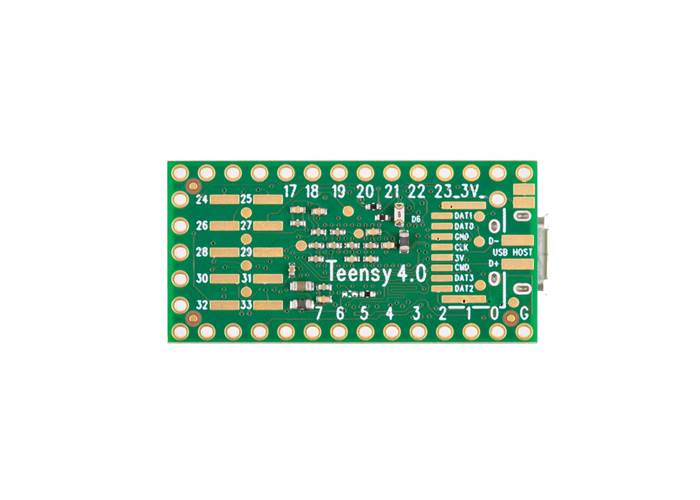
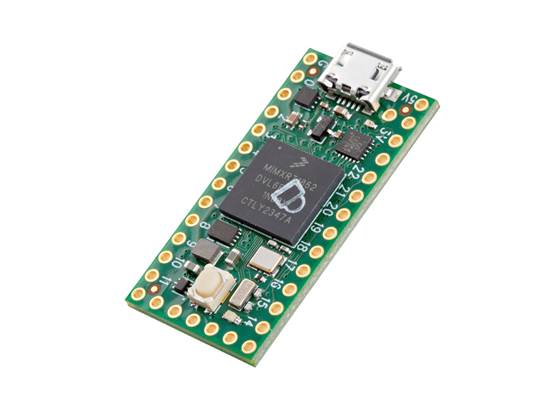
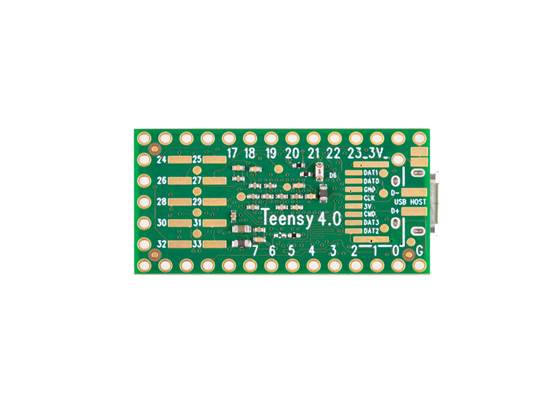
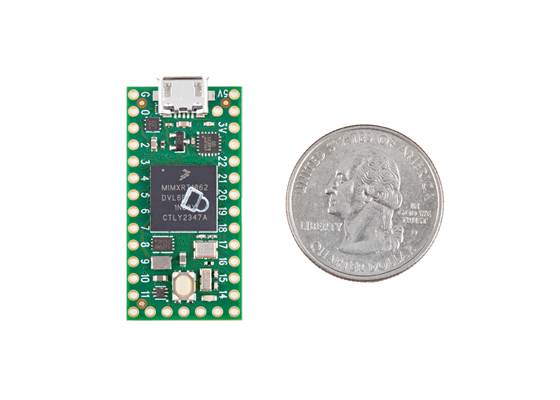
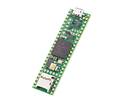
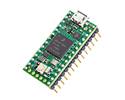
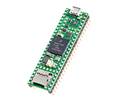
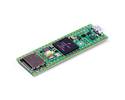
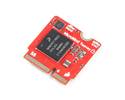
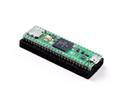
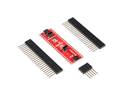
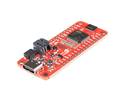
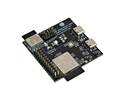
The Teensy 4.0, Lockable, delivers the record-breaking 600 MHz ARM Cortex-M7 processing power and adds a one-time, programmable fuse for permanent code security and IP protection.
Special Order
Shipping from $4.90
+440 more from our supplier in 7-10 days
Our Code: SKU-011085
Supplier Link: [SparkFun MPN:28368]
Meet the Teensy 4.0, a compact development board that packs one of the fastest microcontrollers available today into a familiar Teensy footprint. This special Lockable version is designed for production and commercial applications, providing all the power of the standard Teensy 4.0 with the crucial ability to secure your code. This board is built around an ARM Cortex-M7 CPU running at 600 MHz, supported by 1MB (1,024KB) of RAM and 2MB (2,048KB) of Flash memory (with 64KB reserved for EEPROM emulation).
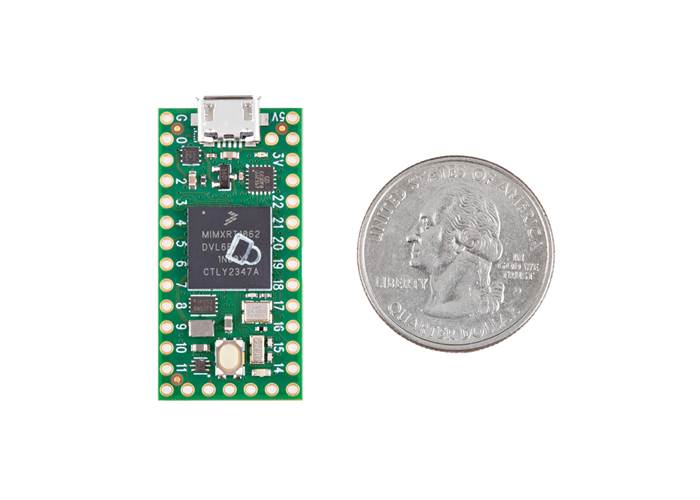
The Teensy 4.0 maintains the same size, shape (1.4 x 0.7 inches), and breadboard-friendly layout as the Teensy 3.2 and retains compatibility with most pin functions, making it a powerful drop-in replacement for your most demanding projects.
This Lockable version of the Teensy 4.0 is intended for developers who are ready to move from prototype to a final, secure product. While a standard Teensy is "unbrickable" and ideal for development, this model provides write access to the chip's eFuses, allowing you to lock the device into a secure mode permanently.
Once you program your unique encryption key and lock the device, your application code is encrypted. This prevents unauthorised reading, cloning, or modification of your intellectual property. In secure mode, the JTAG debug port is permanently disabled, and the microcontroller will only run code that has been encrypted with your private key.
Warning: This is a one-way, irreversible process. This board is for advanced users finalizing a product. Setting the fuses incorrectly can permanently "brick" the device. For all development and prototyping, please use the standard Teensy 4.0.
At the heart of the Teensy 4.0 is the NXP MIMXRT1062DVL6B, a chip that establishes the "Crossover MCU" category. This processor is engineered to bridge the gap between low-cost, real-time microcontrollers and high-performance application processors. NXP packed the high-speed 600 MHz Cortex-M7 core into a compact 144-pin package, allowing the Teensy 4.0 to deliver all the power you'll need in a tiny footprint. It combines this speed with an architecture capable of extremely low-latency, real-time responses, and a rich set of high-speed peripherals.
log(), sin(), and cos() are executed at full hardware speed, not through slow software emulation.To keep the 600 MHz CPU fed with data, the Teensy 4.0 utilizes Tightly Coupled Memory (TCM). This special feature allows the Cortex-M7 to use 512K of its 1024K total RAM as incredibly fast, single-cycle access memory via a pair of dual 64/32-bit high-speed buses (one for instructions, one for data).
The Teensyduino environment automatically allocates your sketch code into this blazing-fast memory. This high-speed access is separate from the main AXI bus, allowing powerful DMA-based peripherals to access other memory with excellent efficiency, thereby minimising I/O bottlenecks.
The Teensy 4.0 is a powerful yet efficient microcontroller, consuming approximately 100mA when running at 600 MHz.
delay() and millis().With its combination of raw speed, advanced architecture, and intelligent power features, the Teensy 4.0 provides a level of performance previously unattainable in the microcontroller world, opening up entirely new possibilities for complex and demanding projects.
Note: You can find information about code security & lockable Teensy here.

 Brands