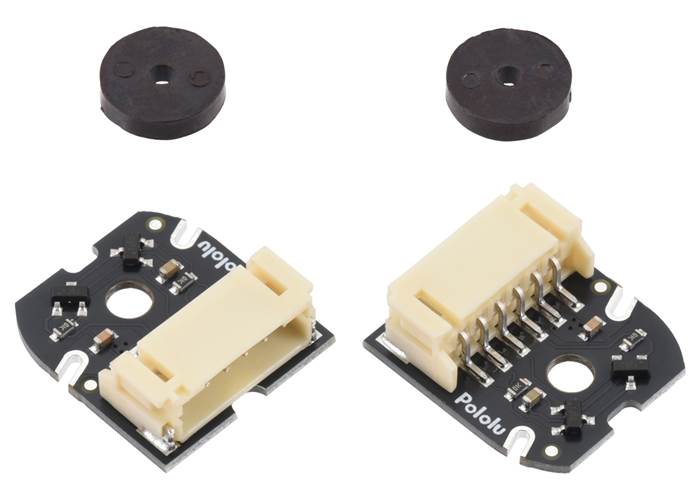
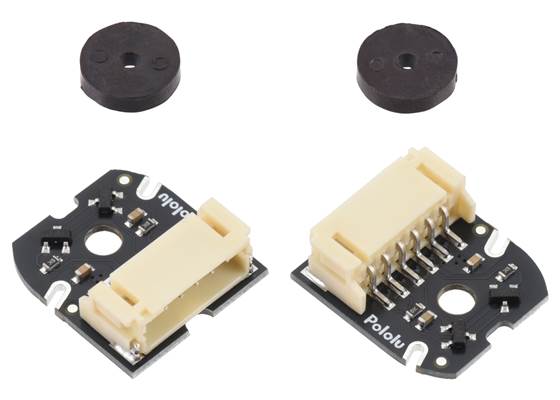
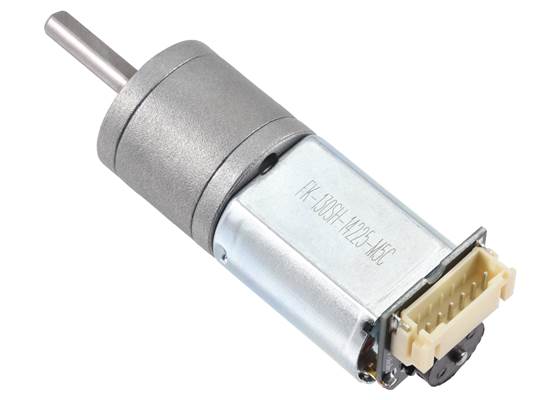
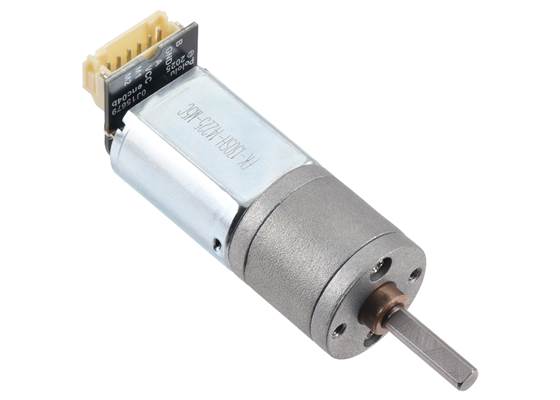
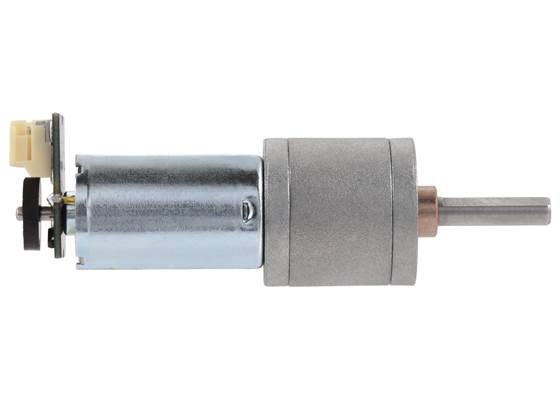
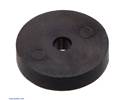
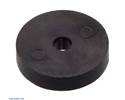
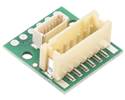
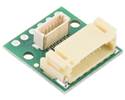
Add quadrature encoders to your 20D mm metal gearmotors (extended back shaft version required) with this kit that uses a magnetic disc and Hall effect sensors to provide 20 counts per revolution of the motor shaft.
Special Order
Shipping from $4.90
+37 more from our supplier in 7-10 days
Our Code: SKU-011003
Supplier Link: [Pololu MPN:5661]
Add quadrature encoders to your 20D mm metal gearmotors (extended back shaft version required) with this kit that uses a magnetic disc and Hall effect sensors to provide 20 counts per revolution of the motor shaft. The sensors operate from 2.7 V to 18 V and provide digital outputs that can be connected directly to a microcontroller or other digital circuit. These encoders have a side-entry, 6-pin male JST PH-type connector, and we have compatible cables available in a variety of lengths.
This kit includes two encoder boards and two magnetic discs.
Our 20D encoder kits include two dual-channel Hall effect sensor boards and two 10-pole magnetic discs that can be used to add quadrature encoding to two 20D mm metal gearmotors with extended back shafts (motors are not included with this kit). The encoder board senses the rotation of the magnetic disc and provides a resolution of 20 counts per revolution of the motor shaft when counting both edges of both channels. To compute the counts per revolution of the gearbox output shaft, multiply the gear ratio by 20. (We also have a 6-pole magnetic disc available separately that can work with this encoder to provide 12 counts per revolution of the motor shaft.)
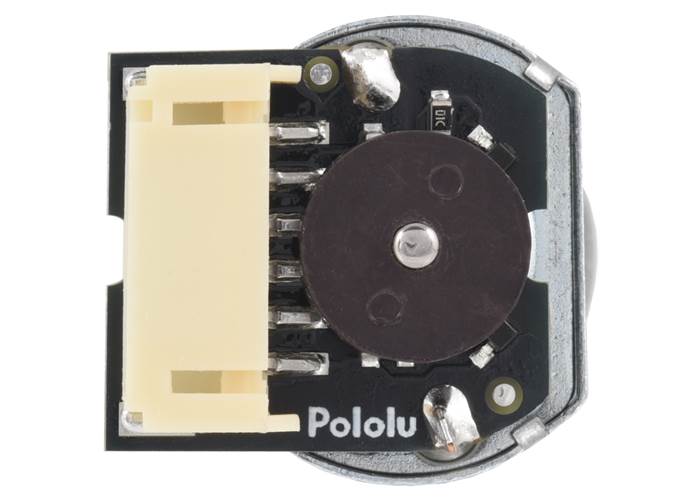
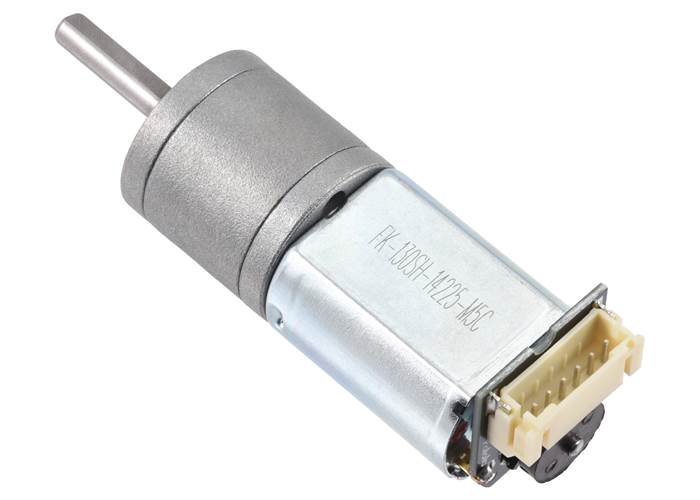
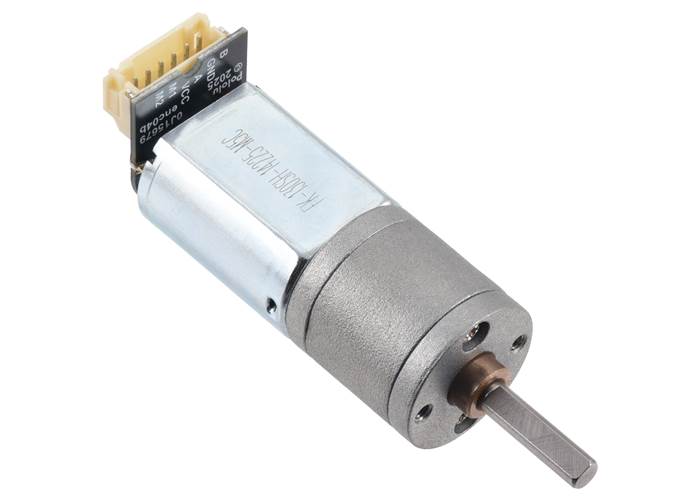
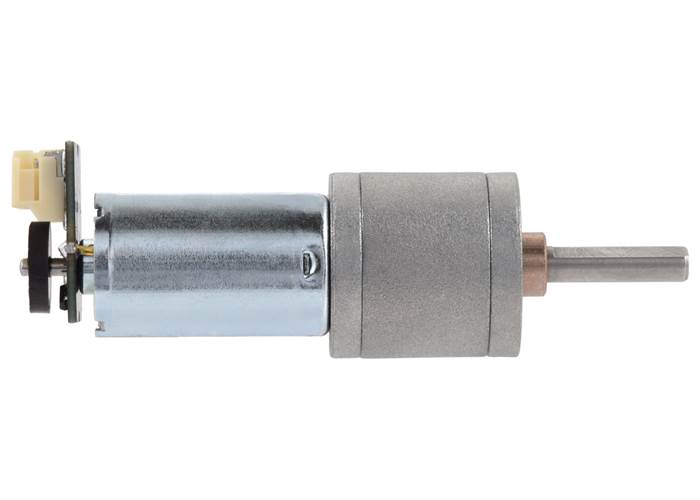
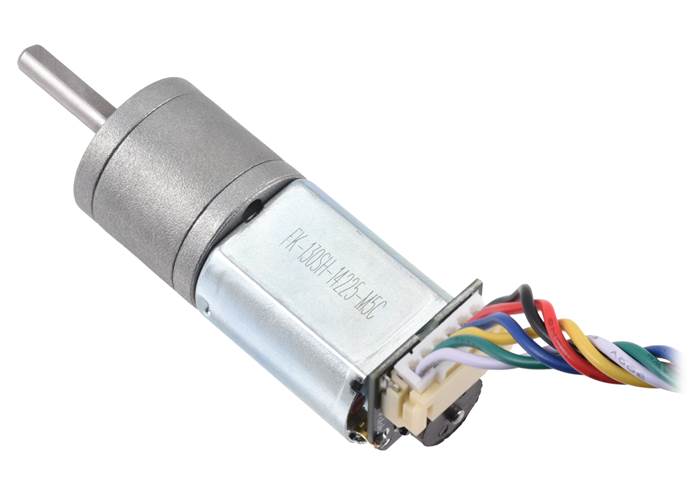
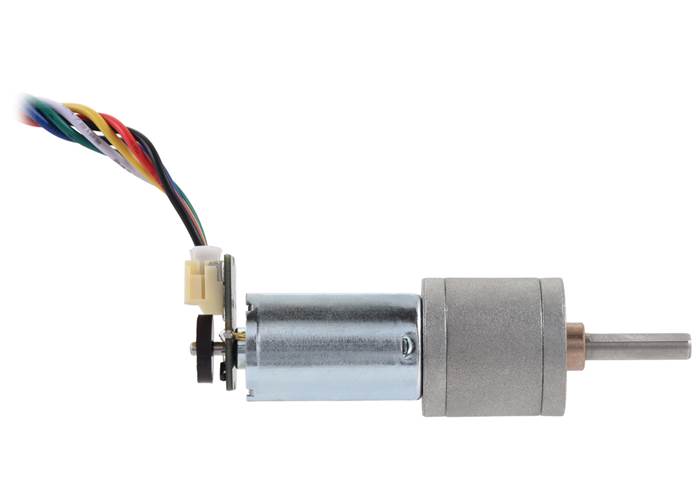
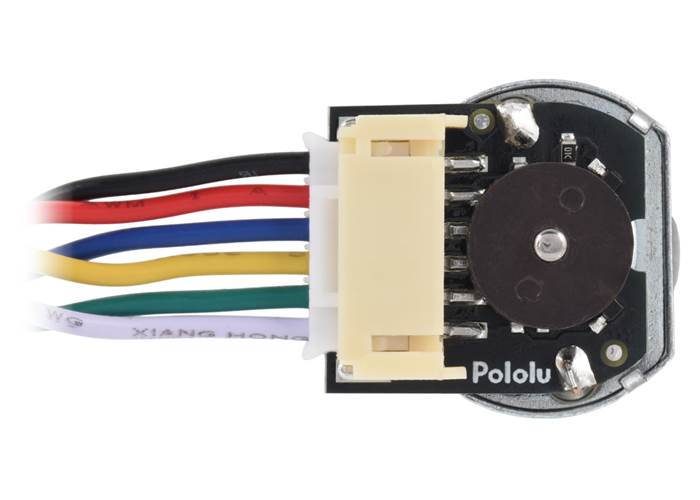
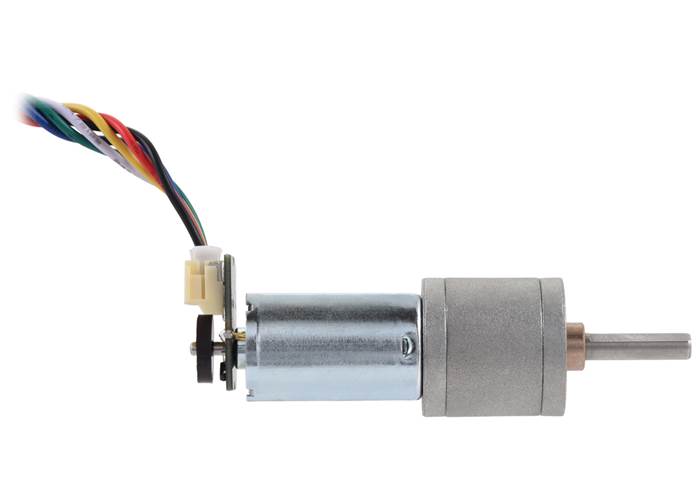
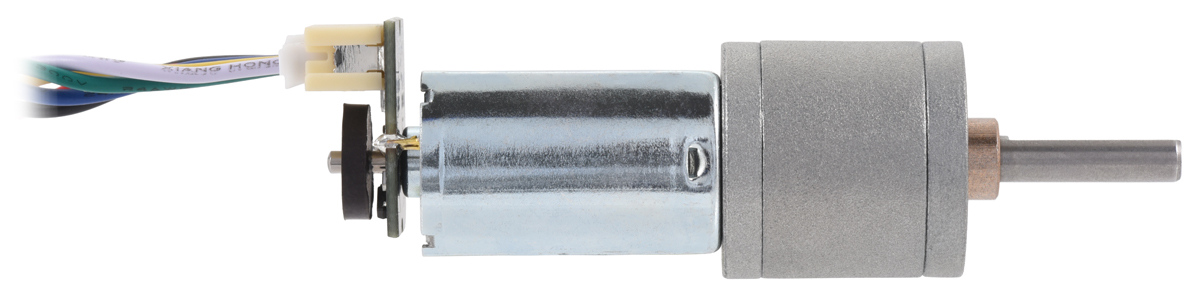
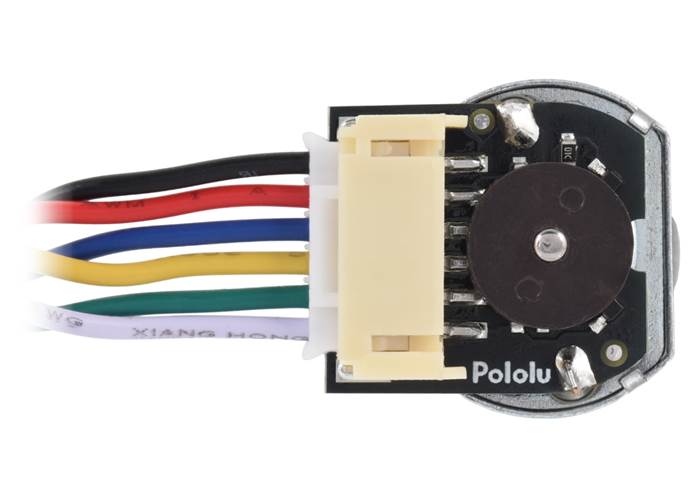
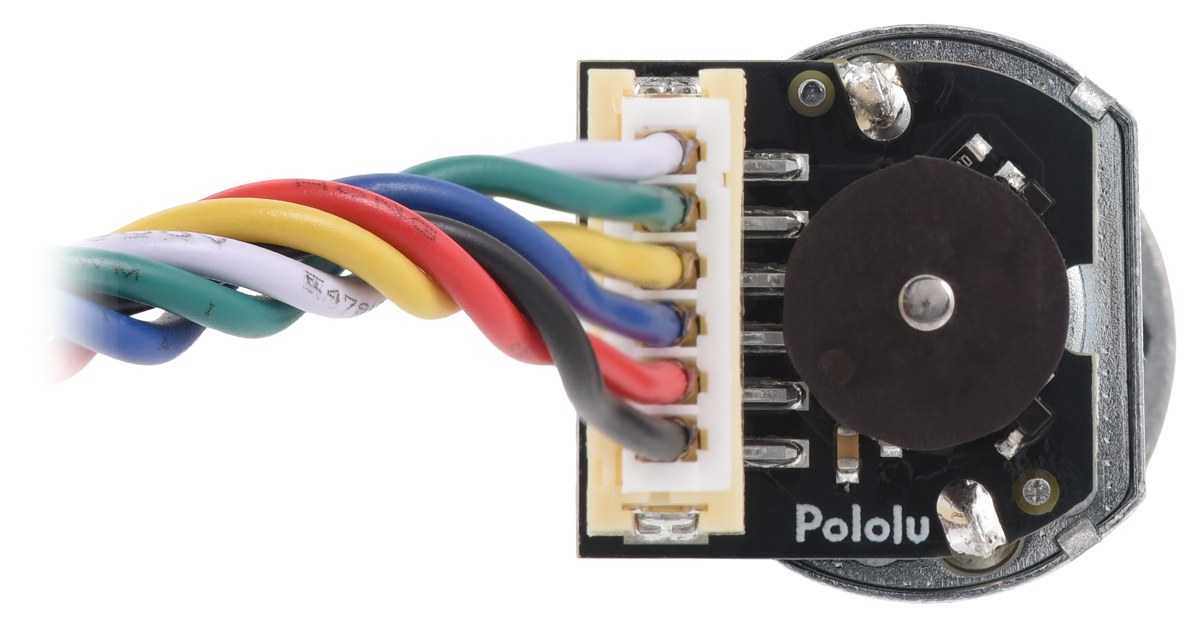
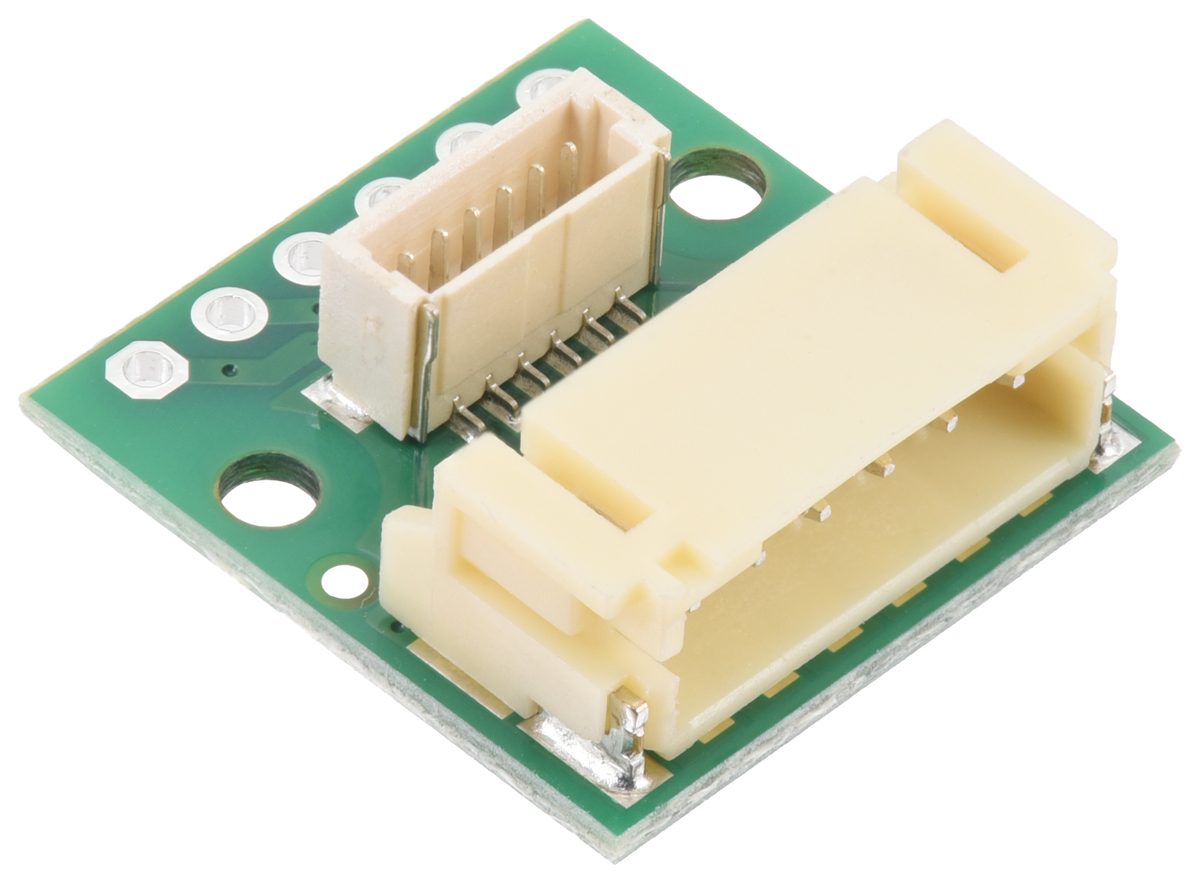
This version has a side-entry, 6-pin male JST PH-type connector, which allow compatible cables to be plugged in perpendicular to the motor case and output shaft:
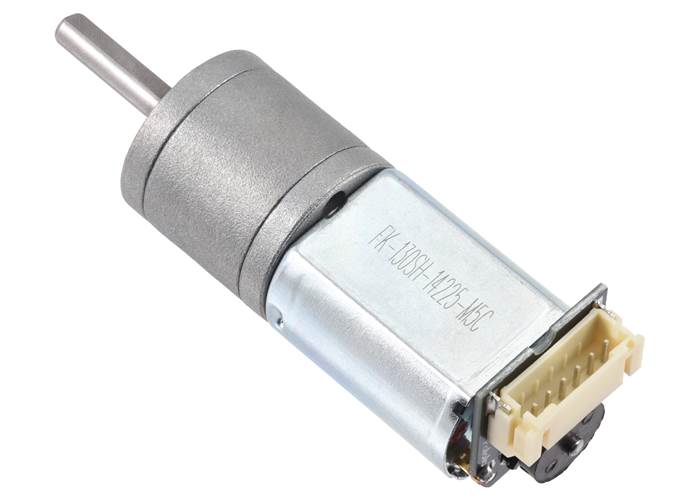
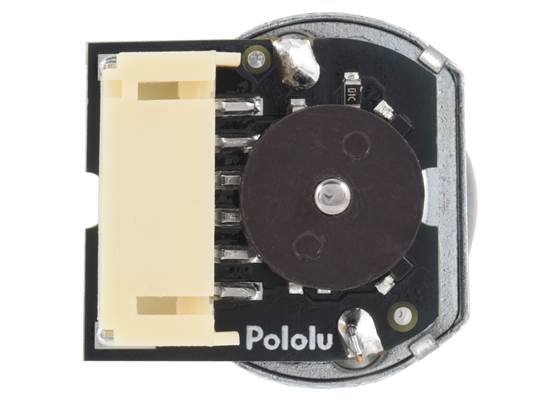
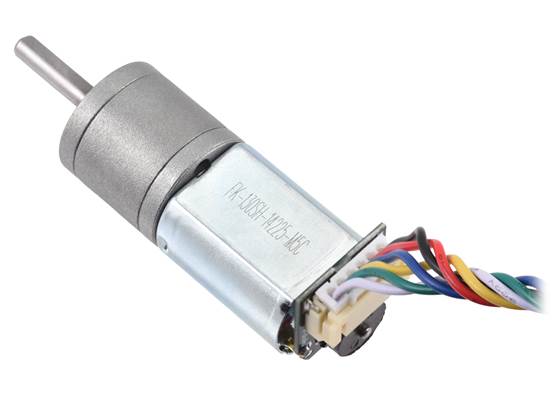
Magnetic Encoder with Side-Entry Connector assembled on a 20D mm Metal Gearmotor with Extended Motor Shaft. (1)
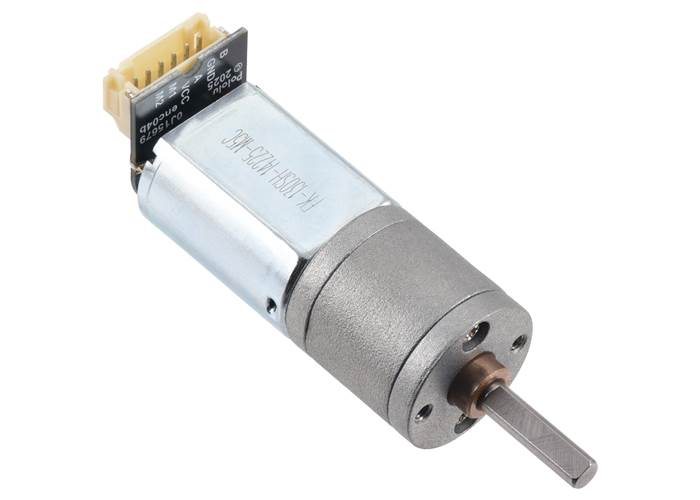
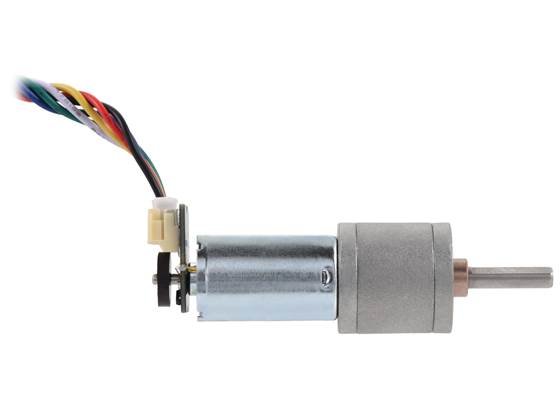
Magnetic Encoder with Side-Entry Connector assembled on a 20D mm Metal Gearmotor with Extended Motor Shaft. (2) (2)
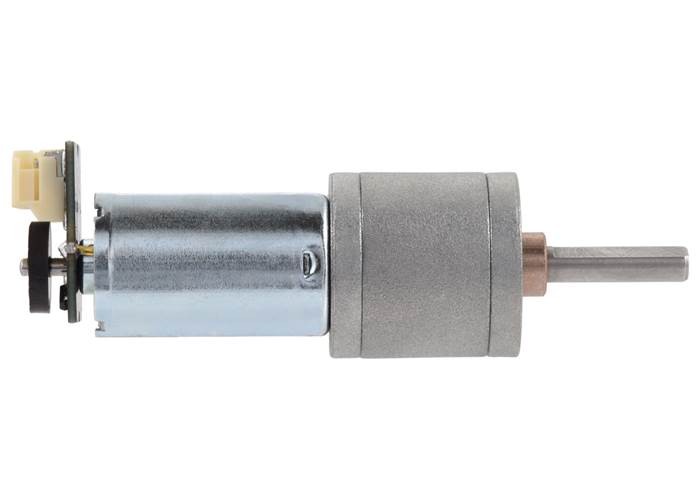
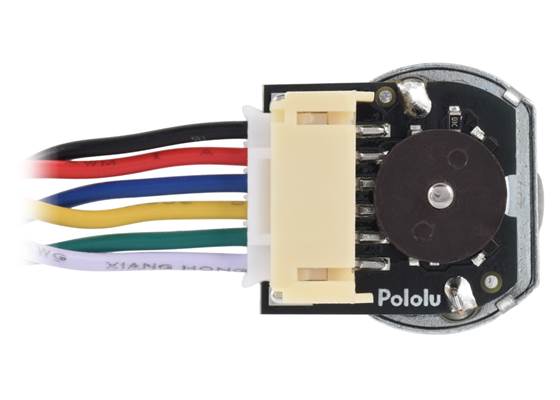
Magnetic Encoder with Side-Entry Connector assembled on a 20D mm Metal Gearmotor with Extended Motor Shaft. (3) (3)
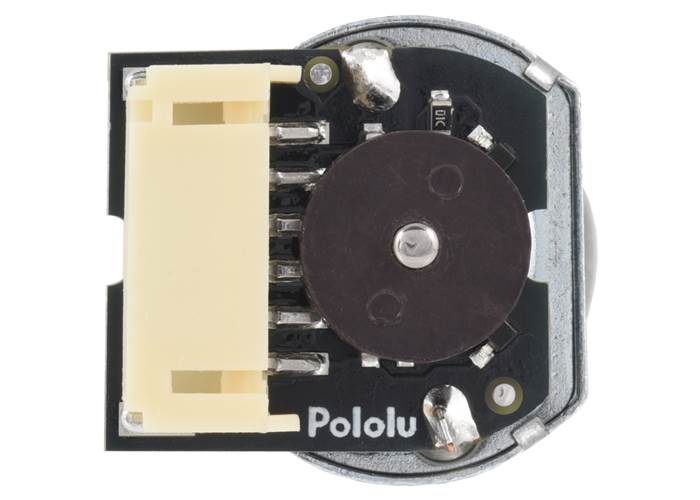
Magnetic Encoder with Side-Entry Connector assembled on a 20D mm Metal Gearmotor with Extended Motor Shaft.
We also carry a version of this encoder with a top-entry connector; the following pictures show comparisons of the side-entry and top-entry versions:
Magnetic Encoder with Side-Entry Connector assembled on a 20D mm Metal Gearmotor with Extended Motor Shaft (JST PH cable not included). (1) |
|
||
Magnetic Encoder with Side-Entry Connector assembled on a 20D mm Metal Gearmotor with Extended Motor Shaft (JST PH cable not included). (2) (2) |
|
Note: This sensor system is intended for users comfortable with the physical encoder installation. It only works with 20D mm metal gearmotors that have extended motor shafts.
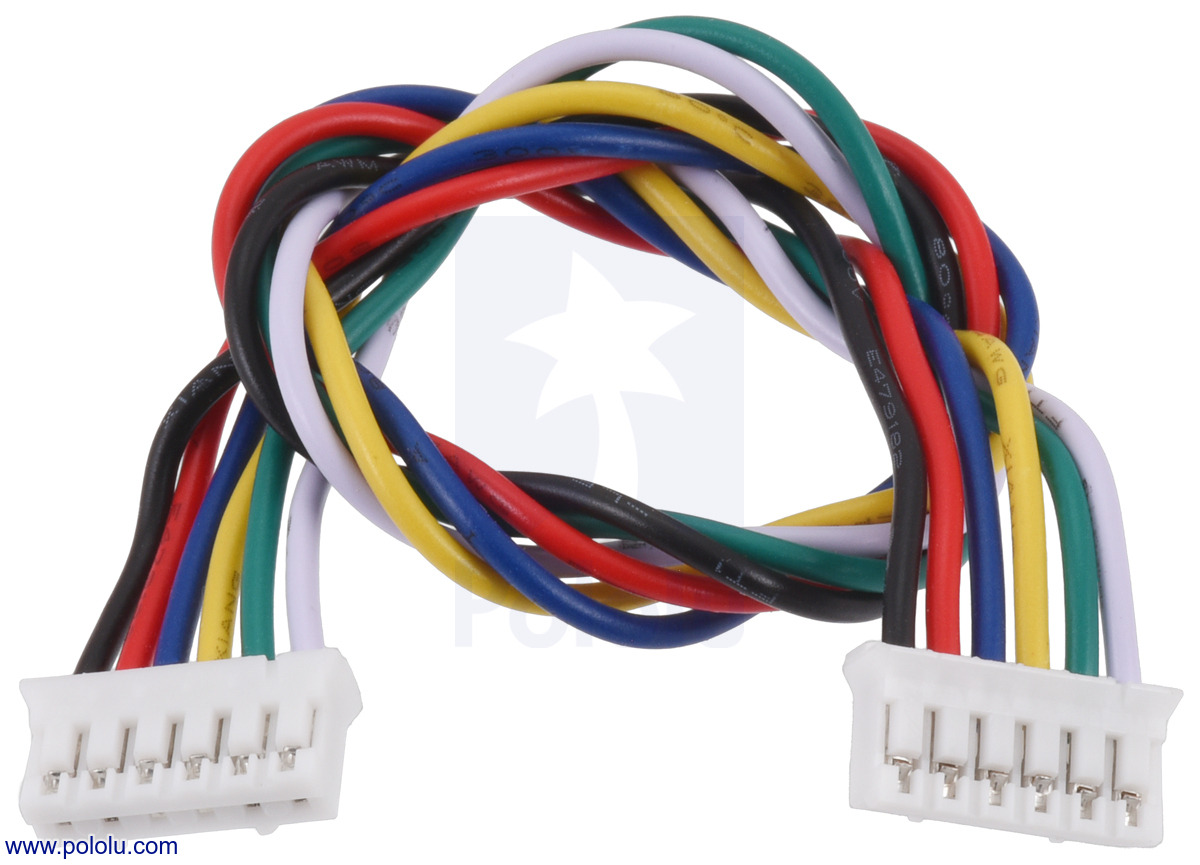
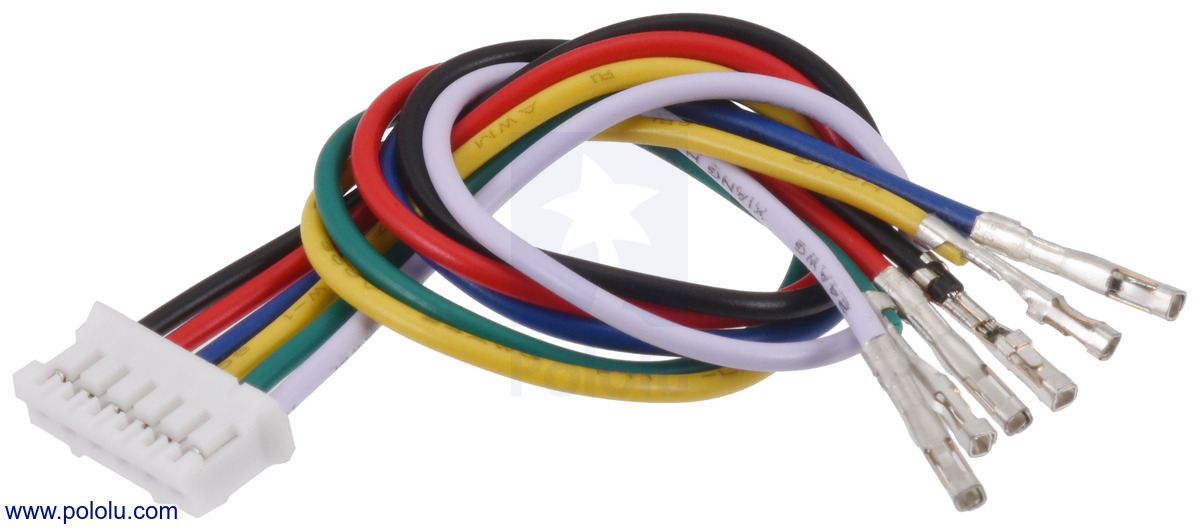
We have various cables that work with the 2mm-pitch JST PH-style connector on these encoders, available in double-sided or single-sided versions of varying lengths. The double-sided versions have twisted wires and female JST PH-type connectors on both ends, and single-sided versions have a female connector on one end and female crimp pins for 0.1″ housings on the other:
|
|
| JST PH-Style 6-Pin Cables | |||||
|---|---|---|---|---|---|
| Pins | Terminations | Length | Item # | Price | |
| 6 | double-sided (JST PH to JST PH) |
10 cm (4″) | #5643 | $3.23 | |
| 16 cm (6.3″) | #5644 | $3.56 | |||
| 25 cm (10″) | #5645 | $4.04 | |||
| 40 cm (16″) | #5646 | $4.85 | |||
| 63 cm (25″) | #5647 | $6.08 | |||
| single-sided (JST PH to 0.1″ crimp pins) |
12 cm (4.5″) | #5640 | $3.34 | ||
| 30 cm (12″) | #5641 | $4.31 | |||
| 75 cm (30″) | #5642 | $6.73 | |||
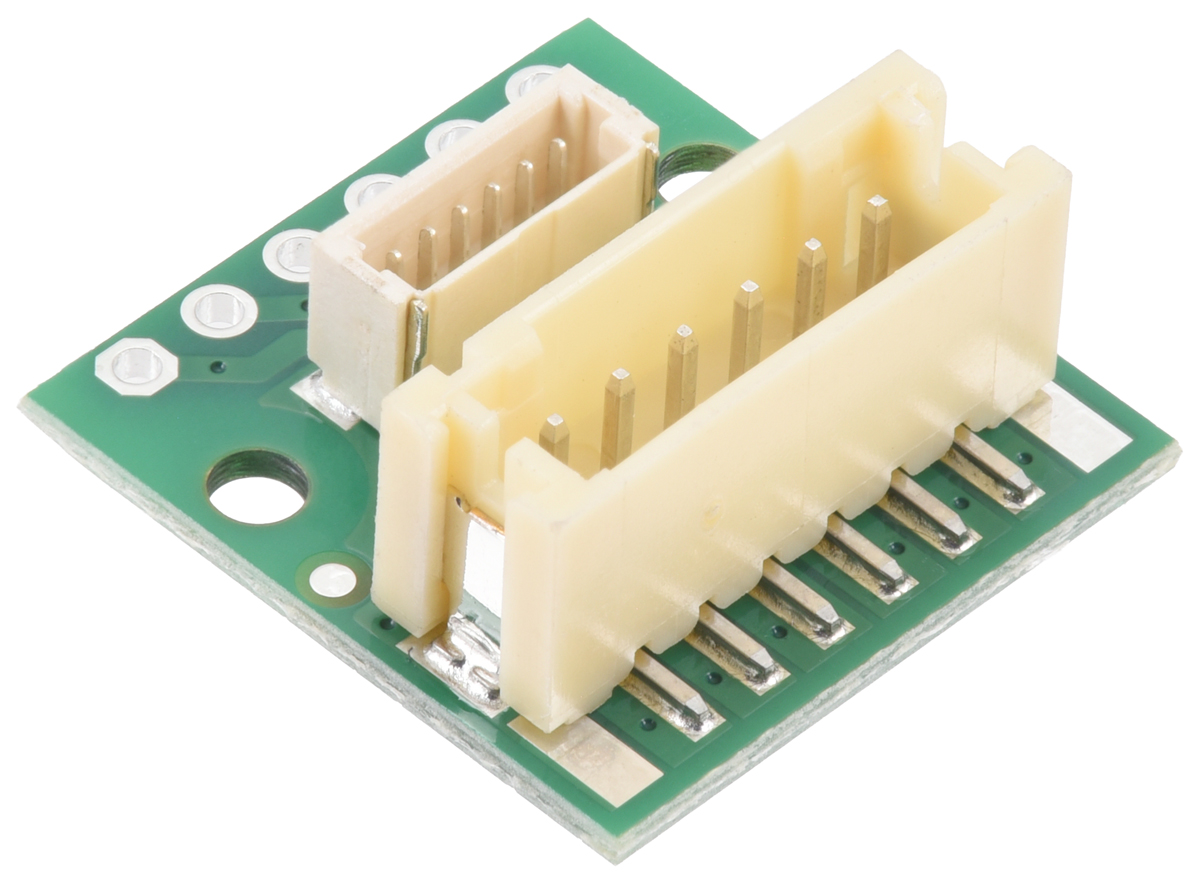
The double-sided cables can be used with our JST PH-style connector breakout boards, which are also available in top-entry and side-entry versions.
|
|
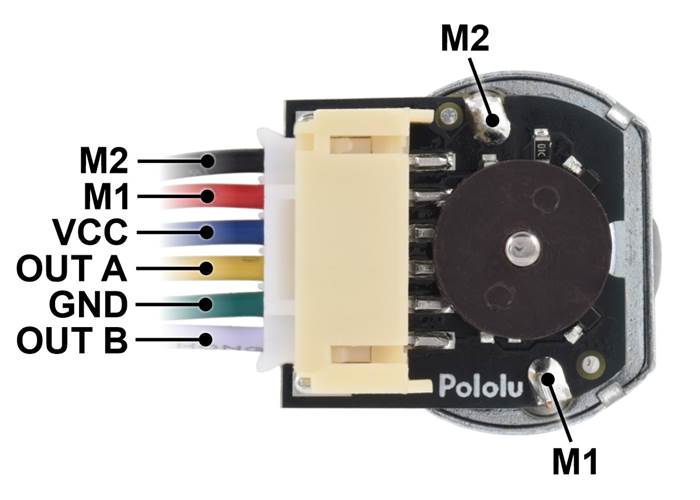
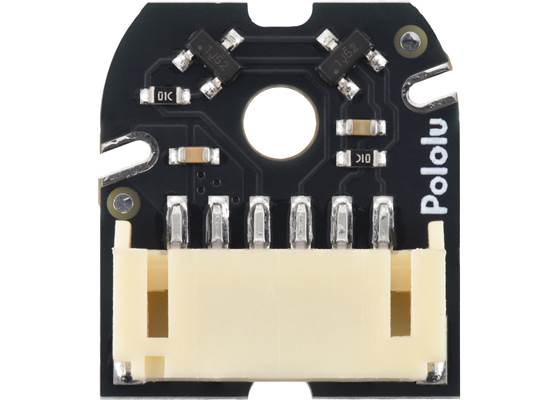
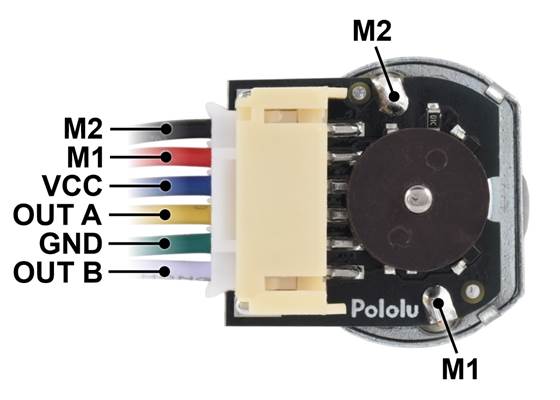
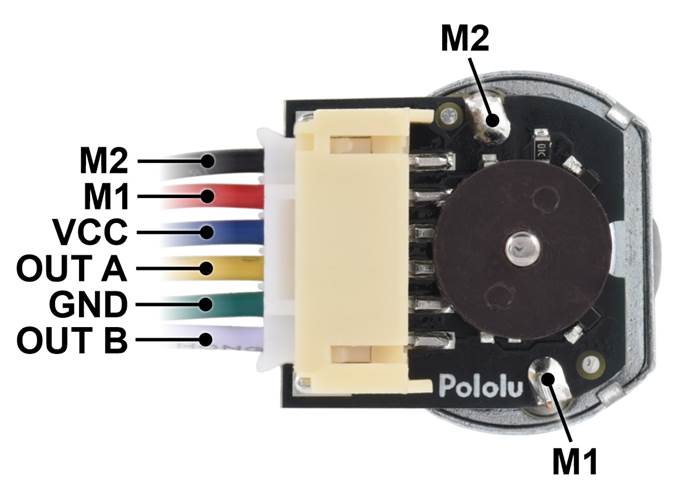
The encoder board is designed to be soldered directly to the back of the motor, with the back shaft of the motor protruding through the hole in the circuit board. One way to achieve good alignment between the board and the motor is to tack down the board to one motor pin and to solder the other pin only when the board is flat and well aligned. Be careful to avoid prolonged heating of the motor pins, which could damage the brushes. Once the board is soldered down to the two terminals, the motor leads are connected to the M1 and M2 connector pins as labelled below, and they can be accessed via the red and black wires when used with our 6-pin JST PH-style cables. The remaining four connector pins are used to power the sensors and access the two quadrature outputs:
Pinout of the Magnetic Encoder with Side-Entry Connector for 20D mm Metal Gearmotors (JST PH cable not included). |
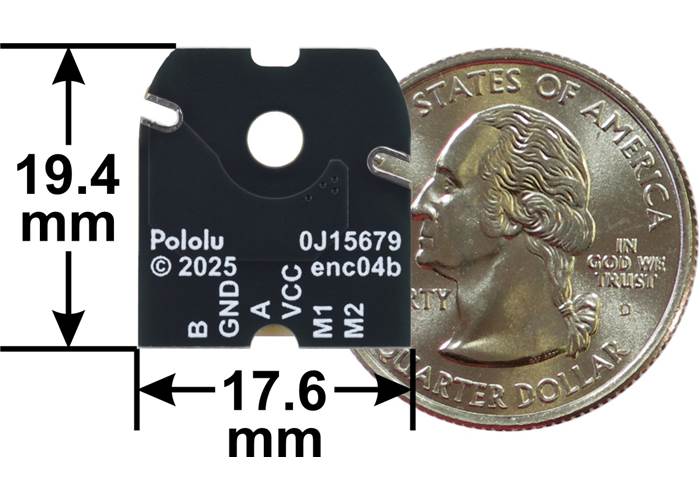
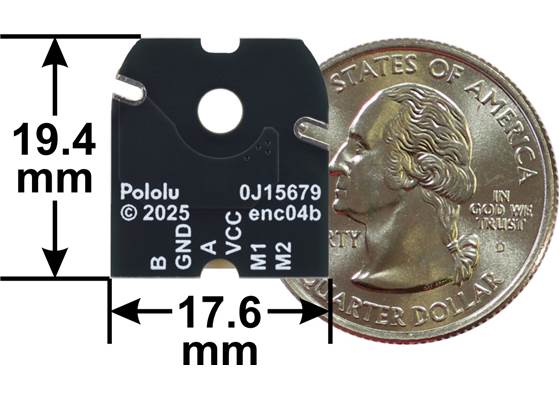
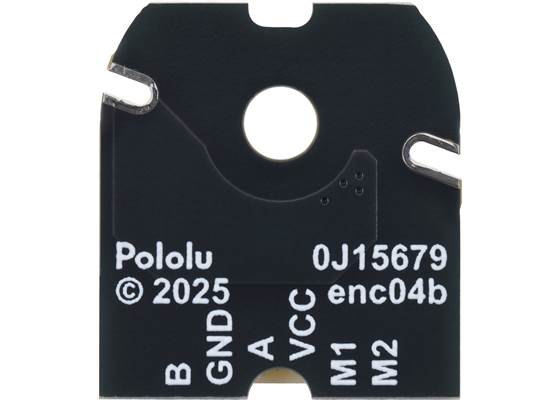
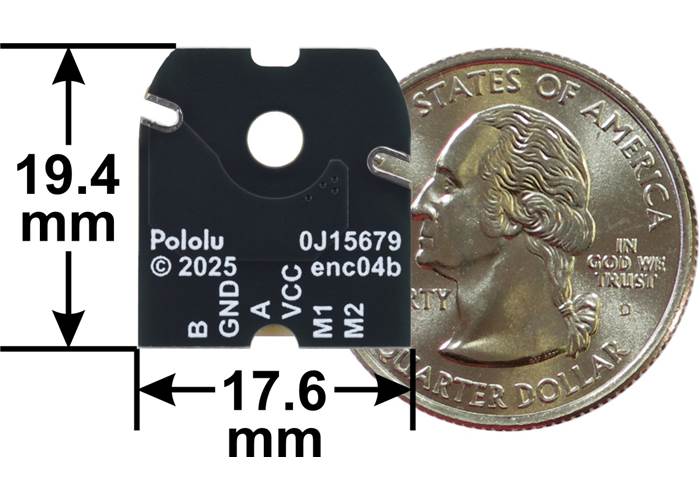
Magnetic Encoder with Side-Entry Connector for 20D mm Metal Gearmotors, motor-side view with dimensions and US quarter for size reference. |
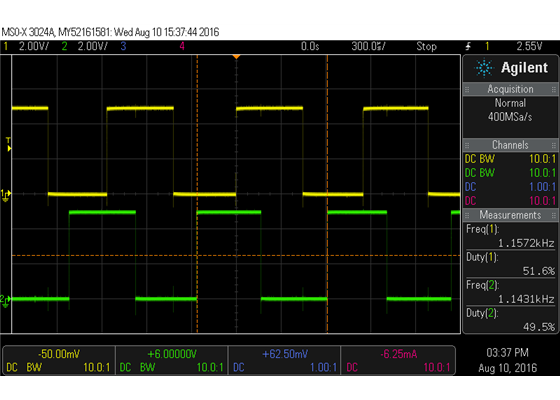
The sensors are powered through the VCC (blue wire) and GND (green wire) pins. VCC can be 2.7 V to 18 V, and the quadrature outputs A and B (yellow and white wires) are digital signals that are either driven low (0 V) by the sensors or pulled to VCC through 10 kΩ pull-up resistors, depending on the applied magnetic field. The sensors’ comparators have built-in hysteresis, which prevents spurious signals in cases where the motor stops near a transition point.
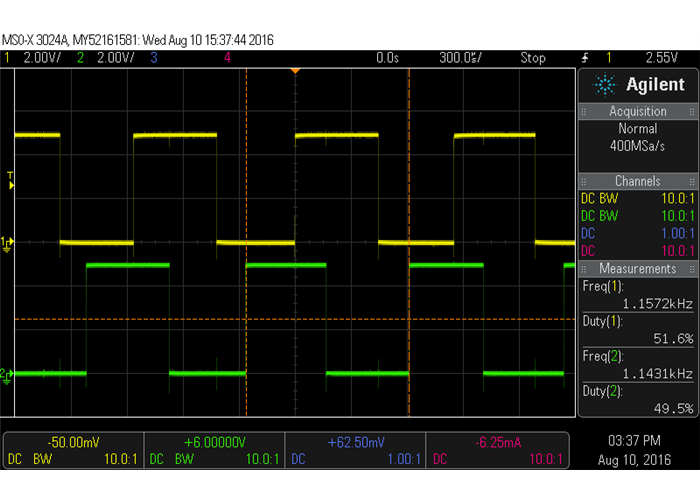
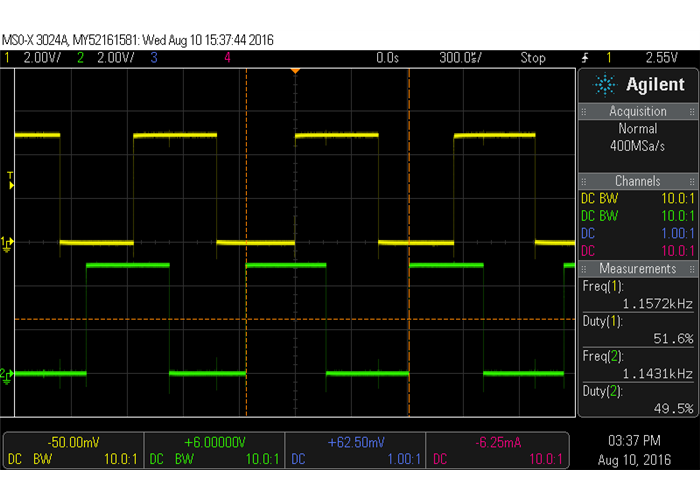
Encoder A and B outputs of a magnetic encoder on a 6V 20D mm metal gearmotor running at 6V.
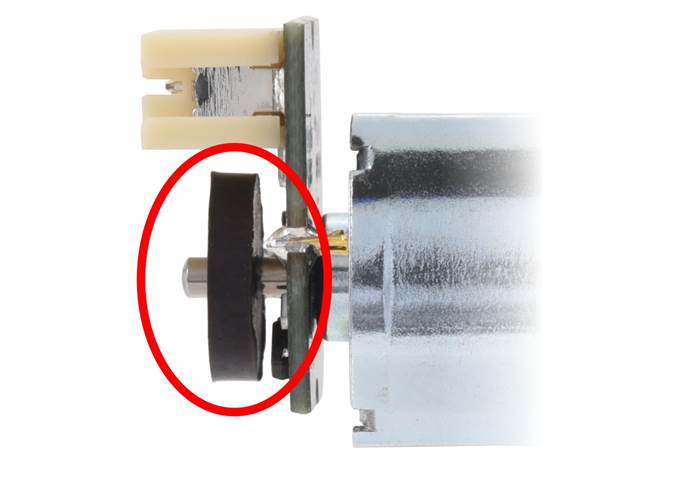
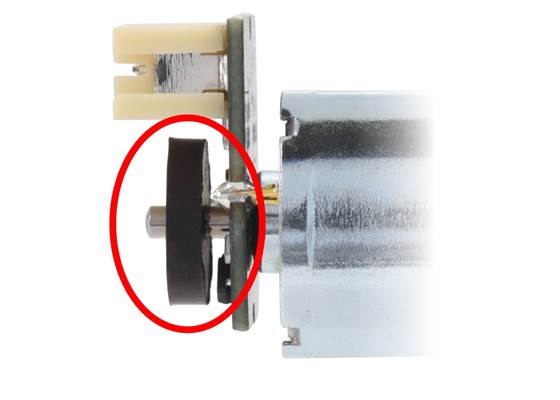
Once the board is soldered to the motor, the magnetic encoder disc can be pushed onto the motor shaft. To help ensure a strong signal, the disc should be positioned close to the sensors, but not so close that the magnet makes contact with them. The exact position does not matter, but a good target is having the shaft protrude approximately 1 mm past the outer face of the disc.
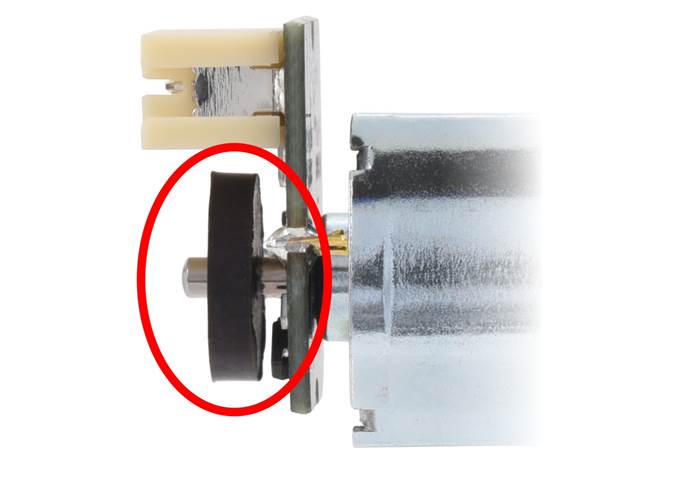
Push the magnetic disc onto the motor shaft so the shaft protrudes approximately 1 mm past the disc.
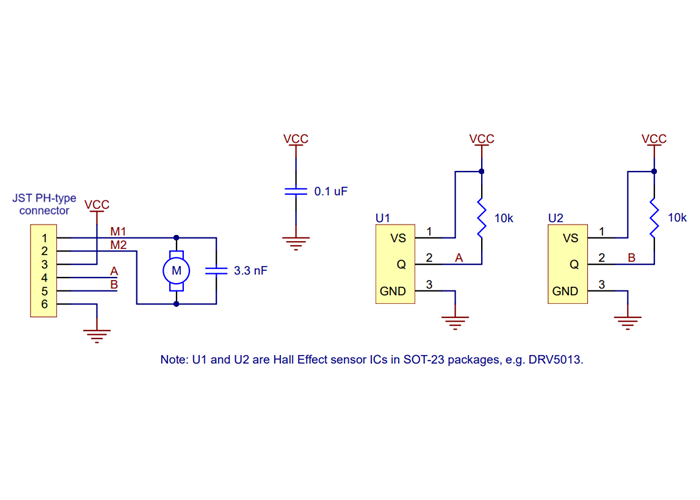
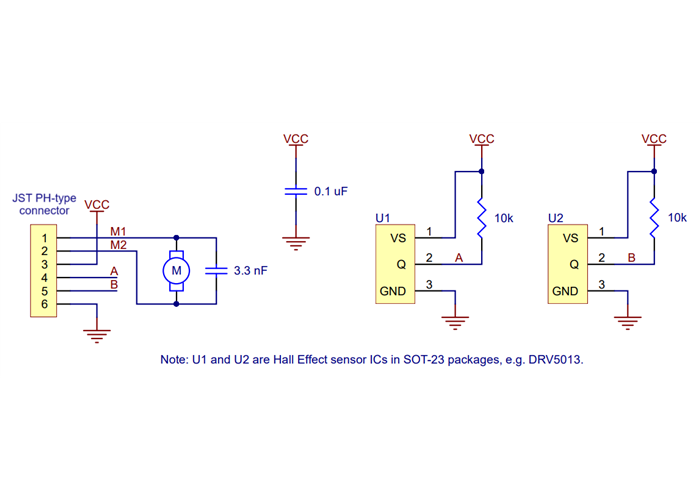
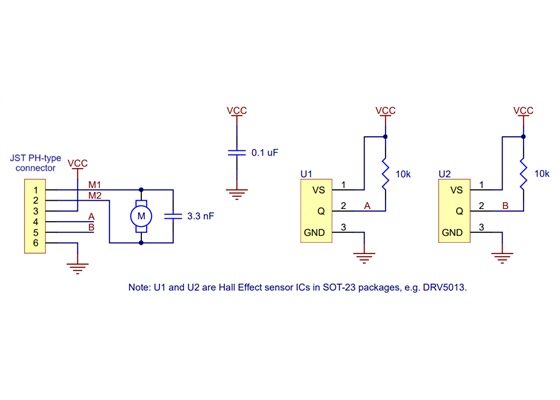
Schematic diagram of the Magnetic Encoder Kit with Top- or Side-Entry Connectors for 20D mm Metal Gearmotors.
This encoder module is a modification of the previous version that adds a connector to enable the use of removable cables. The basic schematic is unchanged, and the electrical performance is identical. The following picture shows the two new encoders with JST PH-type connectors next to the previous (green) one:
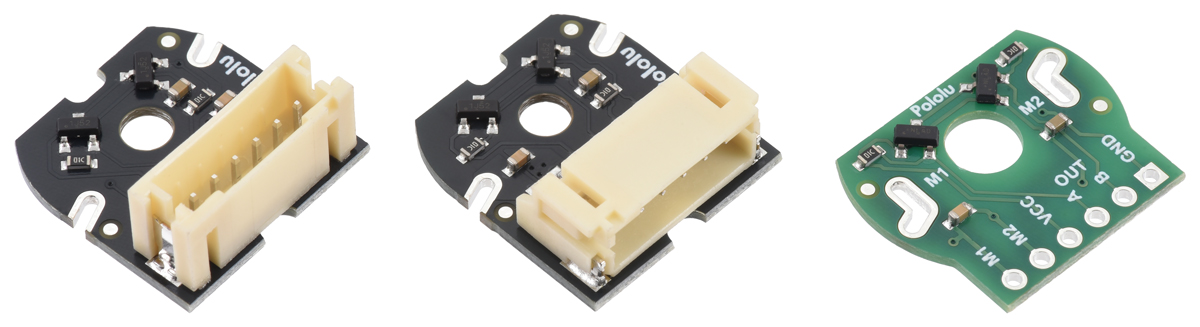 |
Comparison of Magnetic Encoder for 20D mm Metal Gearmotors with Top-Entry Connector (left), Side-Entry Connector (centre), and 0.1″-pitch through-holes (right). |
|---|
| Size: | 17.6 mm × 19.4 mm |
|---|---|
| Weight: | 3.8 g1 |
| Minimum operating voltage: | 2.7 V |
|---|---|
| Maximum operating voltage: | 18 V |
| Connector: | side-entry, 6-pin JST PH-type (2.0 mm pitch) |
| Encoder resolution: | 20 CPR2 |
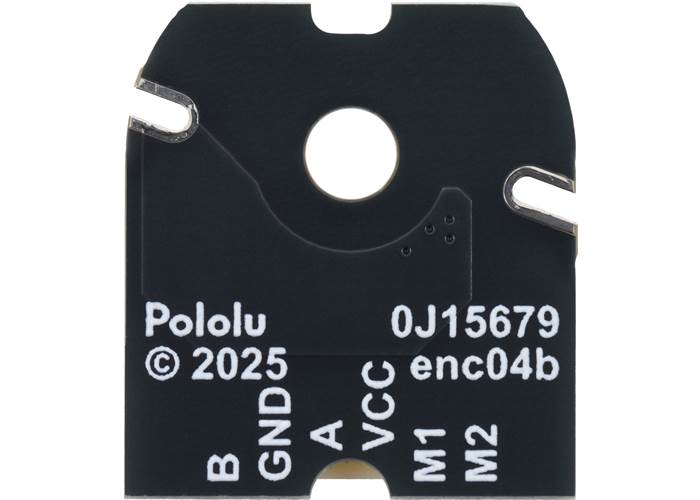
| PCB dev codes: | enc04b |
|---|---|
| Other PCB markings: | 0J15679 |
This file contains dimension diagrams for the Magnetic Encoder Pair Kit with Top-Entry Connector and the Magnetic Encoder Pair Kit with Side-Entry Connector.
This file contains 3D models (in the step file format) of the components for the Magnetic Encoder Pair Kit with Top-Entry Connector and the Magnetic Encoder Pair Kit with Side-Entry Connector.
These DXF drawings show the locations of all of the holes on the Magnetic Encoder Pair Kit with Top-Entry Connector (enc04c) and the Magnetic Encoder Pair Kit with Side-Entry Connector (enc04b).

 Brands