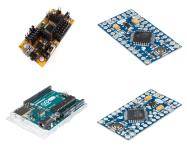
Arduino-compatible boards offer a compact, easy-to-program platform for robotics projects, sensor networks, automation, and embedded learning. They support rapid prototyping with a common development environment and a broad ecosystem of shields, modules, and connectors that simplify integration with motors, sensors, and wireless links. Variants range from tiny, breadboard-friendly boards to larger, multi-purpose devices, all built around versatile microcontrollers with varying levels of performance and peripherals. Typical capabilities include USB or wireless communication, multiple digital and analogue inputs and outputs, and straightforward power and programming options. What differentiates options is processor family and size, native connectivity, on-board peripherals such as accelerometers or security features, and the ease with which they slot into existing projects and education or lab setups.

 Brands